
Surrogacy Eligibility in India: Am I Eligible to hire a surrogate mother in India
Is the path to parenthood through surrogacy more complicated than you think? Knowing who can use surrogacy in India is key for both parents and potential surrogate mothers. As laws change, it’s important to know who qualifies and what they need to do. This guide will help you understand surrogacy eligibility in India, making your journey smoother.
THE SURROGACY (REGULATION) ACT, 2021- In Nutshell
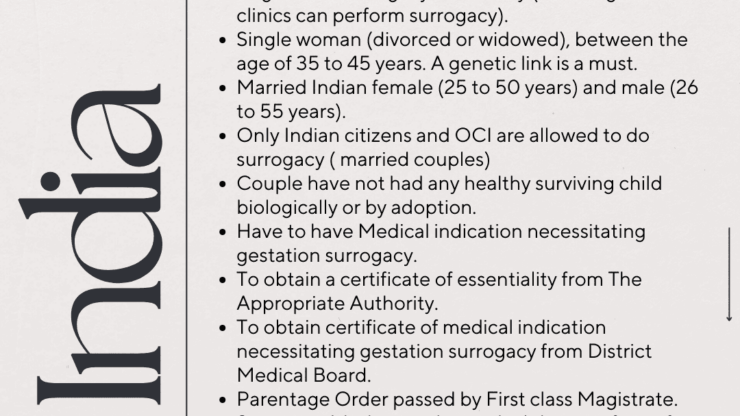
- Altruistic Surrogacy only (no direct financial benefit to the surrogate mother)
- Registered Surrogacy Clinic only (ART Registered clinics can perform surrogacy).
- Single woman (divorced or widowed), between the ages of 35 to 45 years. A genetic link is a must.
- Married Indian females (25 to 50 years) and males (26 to 55 years).
- Only Indian citizens and OCI are allowed to do surrogacy ( married couples)
- A couple have not had any healthy surviving children biologically or by adoption.
- Have to have a Medical indication necessitating gestational surrogacy.
- To obtain a certificate of essentiality from the Appropriate Authority.
- To obtain a certificate of medical indication necessitating gestational surrogacy from the District Medical Board.
- Parentage Order passed by First Class Magistrate.
- Surrogate Mother to obtain the eligibility certificate from the Appropriate Authority.
Legal Documentation Required for Surrogacy in India
| Document | Purpose |
| Certificate of Essentiality | Confirms the couple’s infertility & surrogacy need |
| Surrogacy Agreement | Legally binding contract between intended parents & surrogate |
| Medical Board Approval | Required from the District Medical Board |
| Surrogate Mother’s Eligibility Certificate | Confirms she meets the legal requirements |
| Court Parental Order | Grants legal parental rights to intended parents |
🔹 All approvals must be obtained from government-authorised bodies before starting the surrogacy process in India.
Key Takeaways for surrogacy eligibility In india
- Surrogacy eligibility in India involves specific criteria for intended parents and surrogates.
- Legal updates have reshaped the surrogacy process in India.
- Understanding the requirements is crucial for a successful surrogacy journey.
- Consulting with reputable surrogacy agencies in India can provide valuable guidance.
- Health, marital status, and age play key roles in eligibility.
📞 Get in Touch for a Free Surrogacy Consultation
📱 +91-8800481100 (WhatsApp | LINE | Viber)
📧 neelam@ivfconceptions.com
🌐 https://www.georgiasurrogacyagency.com/
💫 Why Intended Parents Choose Complete Surrogacy for a Safe, Smooth & Successful Surrogacy Journey:
🌍 Access to multiple surrogacy destinations with 15+ years of international experience
🏥 Partnerships with top-tier fertility clinics and agencies, backed by references from past clients
👩🦱 Diverse egg donor options: Asian, Caucasian, African, Oriental, and more
💸 Transparent and affordable pricing—direct payments with no extra agency fees
🔒 No hidden costs—all charges are agreed upon upfront
🤝 Dedicated case manager for personalized support
📲 Fast, honest, and clear communication throughout
📑 Full legal support for visas, documentation, and baby exit processes
🚚 Assistance with frozen sperm/embryo shipment logistics
Additional guides for surrogacy in India:
Is Single Parent Surrogacy Legal in India- Your Guide for Surrogacy in India
Cost of Altruistic Surrogacy in India: A Complete Guide
Surrogacy in India for OCI Card Holders: Navigating the Process
What is the Legal Procedure for Surrogacy in India
Top Surrogacy Agency in India: Your Best Choice
Understanding Surrogacy: A Brief Overview
Surrogacy is a growing option for those wanting to start or expand their families. It involves a woman, the surrogate, who carries and delivers a baby for the intended parents. Knowing the two main types of surrogacy in India is key. This knowledge helps understand who can be a surrogate.
What is Surrogacy?
Surrogacy is when a woman agrees to carry a baby for someone else. This can be done in different ways, each with its own rules and feelings. It helps those who can’t carry a baby themselves, as per India’s surrogacy rules.
Types of Surrogacy in India
There are two main types of surrogacy: traditional and gestational. Each has its own legal and ethical issues:
| Type of Surrogacy | Description | Genetic Link | Legal Considerations |
|---|---|---|---|
| Traditional Surrogacy | The surrogate uses her egg and is artificially inseminated with the intended father’s sperm. | Yes, the surrogate is the biological mother. | Legal complexities arise due to the surrogate’s parental rights. |
| Gestational Surrogacy | The surrogate carries a pregnancy created with an embryo that is not genetically linked to her, often derived from the intended mother’s egg and the intended father’s sperm. | No, the surrogate has no genetic tie to the child. | This method is generally more straightforward legally. |
Knowing the types of surrogacy in India helps future parents. It lets them match their dreams with the rules for surrogacy.
Legal Aspects of Surrogacy in India
Surrogacy laws in India have changed a lot. It’s important for everyone involved to know the legal side of things. The laws now protect surrogate mothers and set rules for intended parents. The Surrogacy (Regulation) Act 2021 has made things clearer and more organized.
Current Surrogacy Laws and Regulations
India has laws to protect surrogate mothers and ensure surrogacy is done right. These laws include:
- Prohibition of commercial surrogacy arrangements.
- Surrogate mothers must have at least one child of their own.
- Intended parents must be a married couple.
The Surrogacy (Regulation) Act 2021
This law has brought a new structure to surrogacy in India. The Surrogacy (Regulation) Act 2021 has specific rules:
| Aspect | Details |
|---|---|
| Type of Surrogacy | Altruistic surrogacy only; commercial surrogacy is banned. |
| Eligibility for Intended Parents | Married heterosexual couples with specific age and medical criteria. |
| Rights and Protections | Legal rights for surrogate mothers related to medical care and compensation. |
| Legal Obligations | Intended parents must enter into an agreement with surrogates. |
The Surrogacy (Regulation) Act 2021 makes sure surrogacy is done ethically. Knowing these laws is key for making good choices in the surrogacy process.
Surrogacy Eligibility in India
Surrogacy requires understanding the eligibility criteria. There are specific rules for those wanting to have a child through surrogacy in India. This guide covers the key criteria for surrogacy in India, including marital status, health, and legal aspects for both locals and foreigners.
Who Can Participate in Surrogacy?
Only married heterosexual couples from India can explore surrogacy. They must show they are emotionally and financially ready. This is proven through the right documents.
Marital Status and Duration Requirements
Marital status is key in surrogacy eligibility in india. Couples need to have been married for at least five years. This shows they are stable and committed before starting surrogacy.
Health and Medical Criteria for Intended Parents
Health is a big factor in who can be an intended parent. Couples must have medical certificates showing they are infertile. This ensures they meet the surrogate requirements set by doctors.
Can foreigners do surrogacy in India?
New laws have stopped foreign couples from using surrogacy in India. This change aims to help local couples with infertility. It focuses on supporting domestic surrogacy efforts.
Eligibility Criteria for Surrogates
Becoming a surrogate mother in India involves certain qualifications and health checks. It’s key to know these surrogate mother requirements if you’re thinking about it. Prospective surrogates must meet important gestational surrogacy requirements for a safe experience for everyone involved.
Requirements for Becoming a Surrogate Mother
To qualify as a surrogate mother, you need to meet several criteria:
- Be at least 25 years old, but not older than 35 years.
- Have at least one biological child of your own.
- Be in a committed relationship or married.
- Have a healthy BMI and pass thorough health screenings, including psychological evaluations.
- Agree to carry only one pregnancy at a time, and ideally, only serve as a surrogate once in their lifetime.
Age and Health Considerations
The age of potential surrogates is crucial for safety and success. Being between 25 and 35 years old reduces health risks. Also, detailed health checks are part of the process. These include physical, mental, and emotional evaluations, ensuring the surrogate mother’s qualifications are needed for this role.
| Criterion | Description |
|---|---|
| Age | 25 to 35 years old |
| Childbearing History | Must have at least one biological child |
| Health Status | Pass required medical and psychological screenings |
| Marital Status | Must be married or in a committed relationship |
| Pregnancy Experience | Ideally only serving as a surrogate once |

The Surrogacy Process in India
The surrogacy process in India involves several steps. These steps are designed to support both intended parents and surrogates. It’s important to know these stages and the legal documents needed. This knowledge helps navigate the complex surrogacy journey.
Step-by-Step Breakdown of the Surrogacy Process
- Eligibility Assessment: Intended parents check if they meet the criteria. This includes looking at their marital status and health.
- Selection of a Surrogate: Choosing the right surrogate is crucial. Agencies help by doing background checks to ensure a good match.
- Medical Screening: Both the surrogate and intended parents go through medical tests. This is to make sure they are healthy and ready for pregnancy.
- Embryo Transfer: The IVF process happens in a clinic. Here, embryos are placed in the surrogate’s uterus.
- Monitoring Pregnancy: The surrogate’s health and the baby’s growth are closely watched. This is done to ensure everything goes smoothly.
- Birth and Registration: After the baby is born, legal steps start. This includes getting the birth registered and establishing parental rights.
Legal Documentation and Agreements
Legal documents are key in surrogacy. They protect the rights of everyone involved. Important documents include:
| Document Type | Purpose |
|---|---|
| Surrogacy Agreement | Outlines the roles, duties, and payment between the surrogate and intended parents. |
| Medical Consent Forms | Allows for medical procedures related to surrogacy. It ensures the surrogate gives informed consent. |
| Parental Rights Certificate | Confirms the legal parentage after birth. It’s needed for passports and legal documents. |
In summary, knowing the surrogacy process in India and the legal documents is crucial. It makes the journey better for everyone involved. It ensures legal protections and follows the law.
Cost of Surrogacy in India
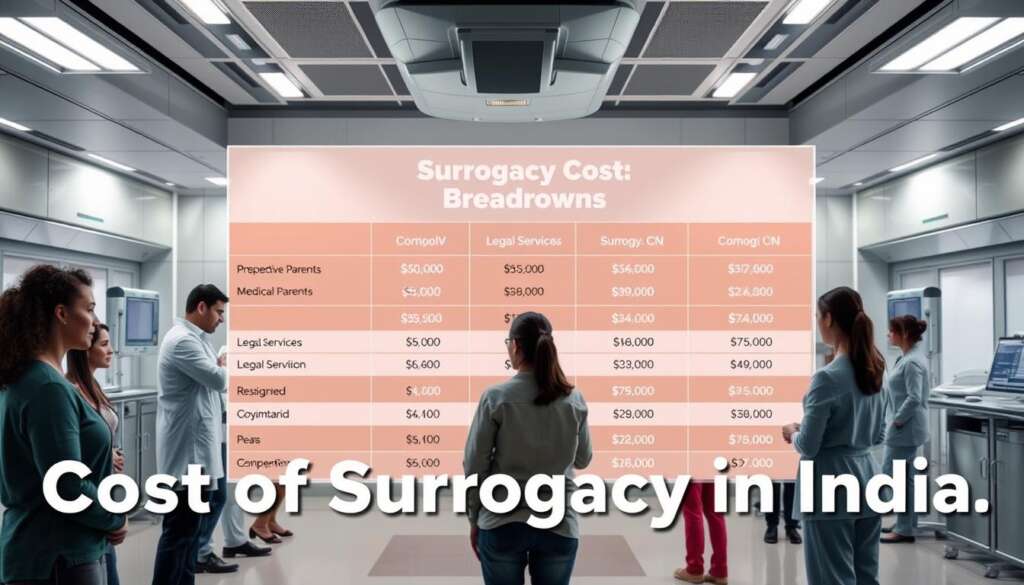
Understanding the cost of surrogacy in India is key for those planning this journey. The cost can change based on the type of surrogacy and services needed. With altruistic surrogacy, cost packages are clearer and more structured. This section explores the costs, comparing traditional and altruistic surrogacy.
Understanding Surrogacy Price in India
Surrogacy costs in India vary due to medical, legal, and support services. Generally, it’s more affordable than in Western countries. Intended parents should budget for:
- Medical expenses for IVF and pregnancy
- Legal fees for contracts and agreements
- Surrogate mother’s compensation (following altruistic guidelines)
- Pre and postnatal care
Be prepared for unexpected costs. Knowing all expenses helps in planning for this big investment.
Altruistic Surrogacy Packages
Altruistic surrogacy in India doesn’t involve extra fees. It focuses on medical and insurance costs. These packages outline what’s included, like medical, legal, and care services.
Intended parents can pick packages that fit their needs. This ensures the surrogate mother gets the care she needs. Understanding these packages helps in making informed decisions. It also aids in budgeting for the process.
Surrogacy Agencies in India: Finding the Right Partner
Choosing a surrogacy agency in India is a key step in your journey. Agencies in India help make the process smooth and ethical. It’s important to pick a partner that offers good support and follows the right guidelines.
How to Choose a Reputable Surrogacy Agency
When picking a surrogacy agency, consider these points:
- Reputation: Look for agencies with good reviews and feedback from past clients.
- Transparency: A good agency should clearly share information about their services, costs, and rules.
- Legal Compliance: Make sure the agency follows India’s laws on surrogacy.
- Support Services: Check if the agency provides full support, including counseling.
Questions to Ask Potential Agencies
Talking to potential surrogacy agencies can help you decide. Ask these questions:
- What are your success rates with surrogacy?
- Can you explain your surrogacy agency guidelines in detail?
- How do you ensure the well-being of your surrogate mothers?
- What legal assistance do you provide during the surrogacy journey?
- How is communication handled throughout the process?
Conclusion
Understanding the surrogacy process in India is key for those thinking about it. It’s a hopeful journey but also tied to surrogacy laws in India. These laws guide how the process works, covering who can be involved.
The surrogacy eligibility in India aims to support ethical practices. It’s important to know the legal and health rules. Following these rules is crucial for a good outcome. Without proper research and advice, it can be hard to get through.
Surrogacy is a chance for many families, but it’s important to know what’s involved. Getting expert advice is vital. It helps make sure the surrogacy is safe and ethical.
📞 Get in Touch for a Free Surrogacy Consultation
📱 +91-8800481100 (WhatsApp | LINE | Viber)
📧 neelam@ivfconceptions.com
🌐 https://www.georgiasurrogacyagency.com/
💫 Why Intended Parents Choose Complete Surrogacy for a Safe, Smooth & Successful Surrogacy Journey:
🌍 Access to multiple surrogacy destinations with 15+ years of international experience
🏥 Partnerships with top-tier fertility clinics and agencies, backed by references from past clients
👩🦱 Diverse egg donor options: Asian, Caucasian, African, Oriental, and more
💸 Transparent and affordable pricing—direct payments with no extra agency fees
🔒 No hidden costs—all charges are agreed upon upfront
🤝 Dedicated case manager for personalized support
📲 Fast, honest, and clear communication throughout
📑 Full legal support for visas, documentation, and baby exit processes
🚚 Assistance with frozen sperm/embryo shipment logistics

FAQs for surrogacy eligibility in India
What is surrogacy?
What are the current surrogacy laws in India?
Who can participate in surrogacy in India?
Are foreign intended parents allowed to pursue surrogacy in India?
What are the requirements for becoming a surrogate mother in India?
What is the surrogacy process in India?
What is the cost of surrogacy in India?
How do I choose a reputable surrogacy agency in India?
More Resources:

I am Neelam Chhagani, CEO and International Patient Follow-up Manager, representing IVF Conceptions. I work as a surrogacy consultant and assist and guide the Intended Parents to become parents via surrogacy, globally.
Read more about me:
https://www.linkedin.com/in/neelam-chhagani-92892229
https://www.ivfconceptions.com/neelam-chhagani-surrogacy-consultant
It will be my great pleasure to assist you.
Add Your Comment