
Altruistic Surrogacy in India for Australian citizens with OCI cards is legally possible to do if they fulfill all other eligibility criteria as per the Surrogacy Regulation Act (2022). For those holding Overseas Citizen of India (OCI) status from Australia, structured opportunities exist to navigate this life-changing journey within clear ethical boundaries.
Reputable organizations like IVF Conceptions provide advanced reproductive technologies paired with rigorous legal compliance. Their programs operate under India’s regulations permitting non-commercial gestational agreements, ensuring all parties receive thorough medical care and psychological support. Transparency remains central, with detailed contracts outlining rights, responsibilities, and health safeguards.
Key Takeaways
- Non-commercial gestational agreements align with India’s current legal framework
- OCI status holders from Australia receive tailored guidance on eligibility criteria
- Medical screenings and psychological evaluations ensure participant safety
- Multidisciplinary teams manage cross-border legal documentation
- Parental rights establishment occurs through court-approved processes
- Cost of surrogacy in India for OCI can vary from 25L INR to 35 L INR.
📞 Get in Touch for a Free Surrogacy Consultation
📱 +91-8800481100 (WhatsApp | LINE | Viber)
📧 neelam@ivfconceptions.com
🌐 www.georgiasurrogacyagency.com

Introduction: Why Australian Intended Parents Are Looking to India
As international surrogacy options shift due to tightening laws, many Australian citizens with Overseas Citizen of India (OCI) cards are reconsidering India, a country once at the forefront of commercial surrogacy. With recent legal changes, altruistic surrogacy is now the only legally permitted model in India.
If you’re an Australian national with OCI status and are exploring parenthood through surrogacy, this blog post breaks down the legal framework, eligibility criteria, process, and considerations for altruistic surrogacy in India in 2025.
What Is Altruistic Surrogacy in India?
Altruistic surrogacy involves a non-commercial arrangement where the surrogate is not paid beyond medical expenses and insurance. The Surrogacy (Regulation) Act, 2021, and its amendments in 2023, prohibit commercial surrogacy across India and only allow altruistic surrogacy under strict eligibility guidelines.
Are Australian Citizens with OCI Cards Eligible?
Yes, under specific conditions. OCI cardholders are considered Persons of Indian Origin and may be permitted to undertake altruistic surrogacy in India, provided they meet the following conditions:

Eligibility Checklist:
- Must be a married heterosexual couple.
- At least one partner must hold an OCI card or both need to have OCI (if both of them are not Indian citizens)
- Must be medically certified as infertile.
- Surrogacy is allowed only once per couple.
- The age limit of the female partner (25 to 50 years ) and the age limit for the male partner (26 to 55 years) should be met.
⚠️ Important: Single parents, LGBTQ+ couples, or those without an Indian or OCI background are not permitted to pursue surrogacy in India under current law.
Overview of Altruistic Surrogacy in India: Benefits
Building families through collaborative partnerships offers a framework where trust and medical expertise intersect. This model prioritizes shared goals over financial transactions, creating bonds rooted in mutual respect and legal safeguards.
Understanding Altruistic versus Commercial Surrogacy
Non-commercial gestational agreements differ fundamentally from profit-driven models. While both involve medical professionals and legal contracts, altruistic surrogacy prohibits monetary compensation beyond documented pregnancy-related expenses. This distinction eliminates conflicts of interest and aligns with ethical guidelines in many countries.
Commercial arrangements often face scrutiny due to concerns about exploitation. In contrast, non-profit frameworks require psychological evaluations and independent legal counsel for all participants. These measures ensure genuine consent and emotional readiness.
Key Advantages for OCI Cardholders
Australian nationals with Overseas Citizen of India status benefit from streamlined eligibility requirements. Key criteria include proof of medical necessity and residency documentation. This simplifies access to reputable clinics specializing in ethical reproductive services.
- Lower costs compared to commercial options
- Court-recognized parental rights transfer
- Multilingual support teams for cross-border coordination
The structured process empowers intended parents to make informed decisions. From initial consultations to birth certificate processing, each phase emphasizes transparency. This approach reduces stress while building pathways to secure parenthood.
Legal Framework and Eligibility Requirements
Legal structures form the backbone of ethical reproductive arrangements across borders. India’s Surrogacy (Regulation) Act 2021 establishes clear guidelines for non-commercial gestational agreements. These rules prioritize medical safety and psychological evaluations while banning financial incentives beyond legitimate expenses.
Indian Surrogacy Laws and Regulatory Guidelines
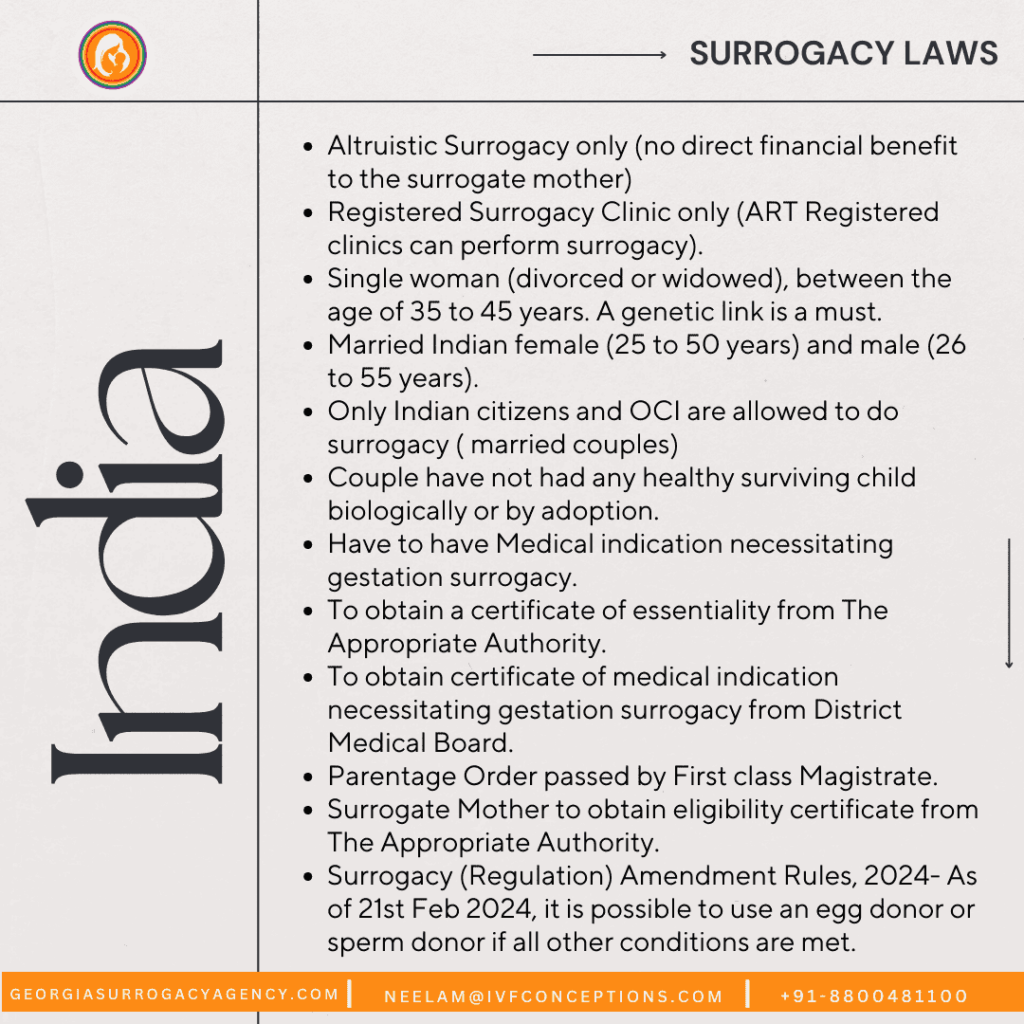
The current framework mandates that clinics follow strict protocols. For example, only married couples facing proven medical infertility qualify. Mandatory approvals from state boards ensure compliance with ethical standards. Key protections include:
- Genetic relationship requirements between intended parents and child
- Medical insurance coverage for surrogate mothers
- Court-supervised parentage orders
| Law/Policy | Key Provision | Impact |
|---|---|---|
| Surrogacy Act 2021 | Bans commercial arrangements | Ensures ethical practices |
| ART Bill 2020 | Regulates fertility clinics | Standardizes medical care |
| OCI Guidelines | Allows parentage transfers | Simplifies citizenship processes |
Legal Documentation Required for surrogacy in India
| Document | Purpose |
| Certificate of Essentiality | Confirms the couple’s infertility & surrogacy need |
| Surrogacy Agreement | Legally binding contract between intended parents & surrogate |
| Medical Board Approval | Required from the District Medical Board |
| Surrogate Mother’s Eligibility Certificate | Confirms she meets the legal requirements |
| Court Parental Order | Grants legal parental rights to intended parents |
🔹 All approvals must be obtained from government-authorised bodies before starting the surrogacy process in India.
Navigating Altruistic Surrogacy in India for Australian citizens with OCI cards

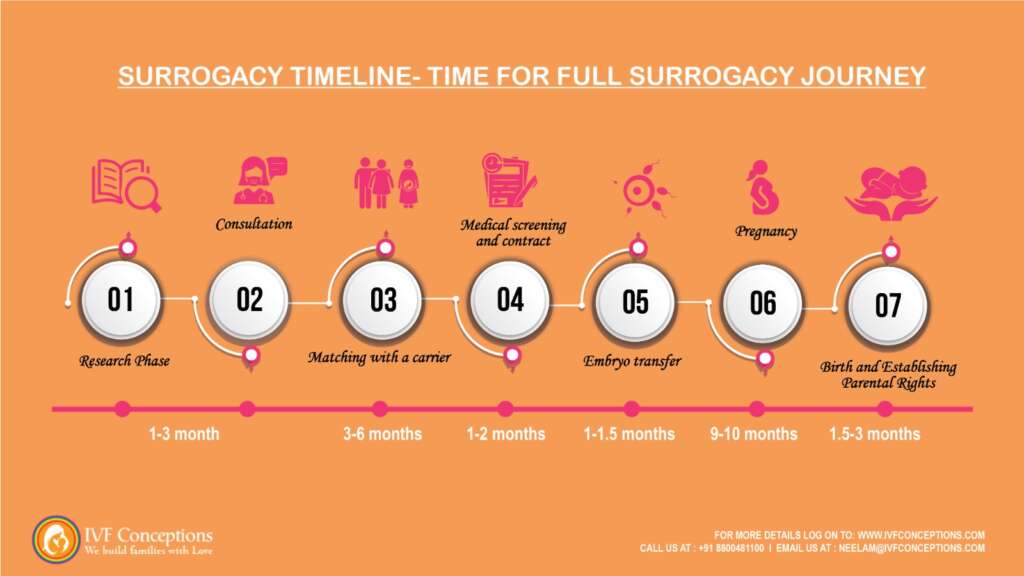
Step-by-Step Process: Altruistic Surrogacy in India
Here’s how Australian OCI cardholders can legally and ethically pursue altruistic surrogacy in India:
Step 1: Medical Evaluation and Infertility Certification
- Obtain a certificate of infertility from a government-authorized fertility clinic in India.
- This certificate is mandatory to initiate the surrogacy process.
Step 2: Identify a Surrogate
- Surrogate must be a married woman aged 25–35 with at least one biological child.
- She must be a close relative of the intended mother or father (though “close relative” is still not clearly defined in the legislation).
- Surrogacy is allowed only once in her lifetime.
Step 3: Apply to the National/State Surrogacy Board
- The couple must submit a formal application to the appropriate Surrogacy Board.
- Required documents include:
- OCI card and Australian passport
- Marriage certificate
- Infertility certificate
- Surrogate’s consent and medical clearance
- Affidavits and insurance policies
Step 4: Medical and Legal Clearance
- Undergo thorough counseling, medical tests, and legal document verification.
- Sign a legal surrogacy agreement outlining the terms, responsibilities, and post-birth procedures (although commercial compensation is banned).
Step 5: Embryo Transfer and Monitoring
- IVF and embryo transfer are performed at a licensed ART (Assisted Reproductive Technology) clinic.
- Regular health monitoring of the surrogate is required throughout the pregnancy.
Step 6: Birth, Legal Parentage & Exit Process
- After delivery, the intended parents are listed on the birth certificate.
- Apply for an Australian passport and an exit visa for the newborn through proper legal channels.
Cost of Altruistic Surrogacy in India (2025 Estimate)
Even though commercial payments to surrogates are prohibited, intended parents will still bear several costs: Let’s break down surrogate cost in India:
Surroacy cost breakdown table for Altruistic Surrogacy in India (2025) for Australian citizens with OCI cards, showing all costs in INR, with the total cost ranging between ₹25,00,000 to ₹35,00,000:
Estimated Cost of Altruistic Surrogacy in India (2025)
| Expense Category | Estimated Cost (INR) |
|---|---|
| IVF & Fertility Treatments | ₹4,00,000 – ₹6,00,000 |
| Surrogate Medical Care & Monitoring | ₹4,00,000 – ₹6,00,000 |
| Delivery & Hospitalization | ₹2,00,000 – ₹4,00,000 |
| Surrogate Insurance Coverage | ₹3,00,000 – ₹5,00,000 |
| Legal Documentation & Agreements | ₹2,00,000 – ₹3,00,000 |
| Agency/Coordination & Administrative | ₹4,00,000 – ₹6,00,000 |
| Travel, Stay, and Misc. Expenses | ₹2,00,000 – ₹3,00,000 |
| Total Estimated Cost Range | ₹25,00,000 – ₹35,00,000 |
Benefits of Altruistic Surrogacy in India for Australian OCI Holders
- Legal Access: OCI status provides a legitimate pathway for eligible couples.
- Lower Cost: Altruistic surrogacy is more affordable compared to US or European programs.
- Cultural Familiarity: Shared language, culture, and family ties make the process smoother.
- Medical Excellence: India offers internationally accredited fertility clinics with high success rates.
Key Challenges and Legal Considerations
- Limited Surrogate Pool: Surrogacy is restricted to close relatives, which may limit options.
- Ambiguity in Terms: The law does not clearly define “close relative,” creating legal gray areas.
- Single Attempt Only: Surrogacy can be used only once per couple in a lifetime.
- Strict Documentation: Fulfilling every legal requirement is essential to avoid delays or rejections.
Tip: Always consult an experienced Indian surrogacy lawyer and fertility consultant to ensure full compliance.
Additional Resources to read:
India as a Surrogacy Destination for International Couples
What is the Legal Procedure for Surrogacy in India
Surrogacy Eligibility in India
Best IVF Doctors in Delhi, India
Conclusion: Is Altruistic Surrogacy in India Right for You?
If you are an Australian citizen with an OCI card, meet the legal requirements, and have a willing relative in India, altruistic surrogacy may be a cost-effective and accessible option in 2025.
While the process is tightly regulated, it offers a viable legal route for couples who qualify—especially when compared to costlier destinations like the US or legally complex ones in Europe.
Ready to explore your options? Connect with specialists who clarify each step while protecting everyone’s well-being. Your family’s future deserves nothing less than expertise wrapped in genuine care.
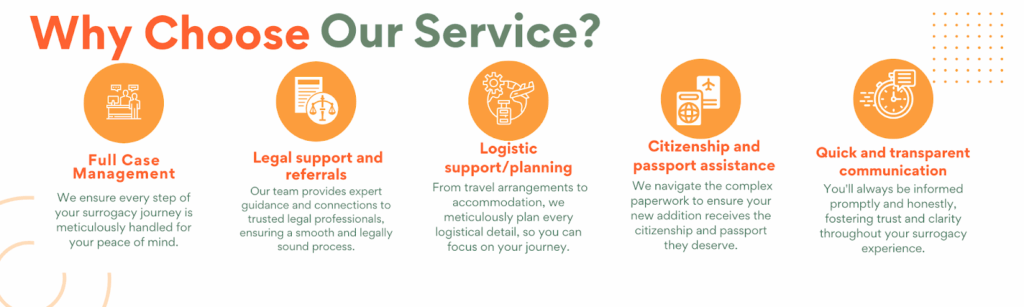
💫 Why Intended Parents Choose Complete Surrogacy for a Safe, Smooth & Successful Surrogacy Journey:
🌍 Access to multiple surrogacy destinations with 15+ years of international experience
🏥 Partnerships with top-tier fertility clinics and agencies, backed by references from past clients
👩🦱 Diverse egg donor options: Asian, Caucasian, African, Oriental, and more
💸 Transparent and affordable pricing—direct payments with no extra agency fees
🔒 No hidden costs—all charges are agreed upon upfront
🤝 Dedicated case manager for personalized support
📲 Fast, honest, and clear communication throughout
📑 Full legal support for visas, documentation, and baby exit processes
🚚 Assistance with frozen sperm/embryo shipment logistics
FAQs for Altruistic Surrogacy in India for Australian citizens with OCI cards
Can Australian citizens with OCI status pursue surrogacy in India?
Yes, provided they meet the eligibility criteria under Indian laws. Intended parents must be legally married for at least two years and provide medical proof of infertility. OCI documentation must be validated alongside adherence to local regulations.
How does altruistic surrogacy differ from commercial arrangements?
Altruistic agreements prohibit financial compensation beyond medical and pregnancy-related expenses. Commercial surrogacy, banned in India since 2018, previously allowed payment for services. Current laws emphasize ethical practices without monetary incentives.
What legal steps ensure parental rights after birth?
A pre-surrogacy contract outlining rights and responsibilities is mandatory. Post-delivery, Australian parents must obtain a birth certificate, DNA test results, and court orders for citizenship registration. Indian clinics often assist with embassy documentation.
Are there restrictions on embryo transfer procedures?
Clinics follow ICMR guidelines requiring genetic linkage to at least one parent. IVF processes use eggs/sperm from intended parents or approved donors. Embryo creation and transfer protocols align with international fertility standards.
How do cultural differences impact the surrogacy journey?
Reputable clinics provide cross-cultural counseling to address communication styles, medical preferences, and ethical expectations. Many Indian surrogates appreciate transparent agreements that respect their health and dignity throughout pregnancy.
What factors determine clinic selection for OCI cardholders?
Prioritize centers accredited by the National Accreditation Board for Hospitals. Key indicators include success rates, legal support teams, multilingual staff, and experience handling international surrogacy cases, particularly for Australian families.
How long does citizenship processing take for the newborn?
Australia grants citizenship by descent upon submission of required documents, typically within 3-6 months. Interim travel permits allow the child to leave India while awaiting final approval from Home Affairs.
What safeguards protect surrogate mothers’ health?
Mandatory health screenings, insurance coverage, and independent legal counsel ensure surrogates’ well-being. Clinics monitor pregnancies through scheduled checkups, nutrition plans, and postpartum care lasting up to six months after delivery.

Highly esteemed, authoritative, and trusted professional with a 14-year of experience in international surrogacy. Advocate for Secure, Legal, and Affordable International Surrogacy.
Neelam Chhagani, MA (Counselling Psychology) and Holistic Infertility and Third-Party Reproduction Consultant.
Member of European Fertility Society, Best Surrogacy Blogger of 2020, with 300 dedicated blogs, and top contributor on Quora for Surrogacy.
Add Your Comment