

Evaluating Surrogacy Agencies in Georgia is a crucial step for intended parents before signing any agreement. With Georgia emerging as a trusted and affordable surrogacy destination, it’s important to assess each agency’s credibility, transparency, and success record.
This guide outlines key factors to review—such as legal compliance, surrogate screening, pricing structure, and client feedback—to help parents choose a reliable surrogacy agency and move forward with confidence.
Key Takeaways
- Check if you’re eligible early—genetic links and U.S. parent physical presence matter for automatic citizenship.
- Gather all necessary documents: birth records, hospital certificates, surrogate affidavits, and DNA when needed.
- Get advice from an immigration attorney before transfer or international travel to avoid disqualifying errors.
- Expect differences by country; plan for embassy filing and possible parentage orders.
- Begin pre-birth coordination with clinics, lawyers, and your U.S. embassy to make the surrogacy baby citizenship application smoother.
📞 Get in Touch for a Free Surrogacy Consultation
📱 +91-8800481100 (WhatsApp | LINE | Viber)
📧 neelam@ivfconceptions.com
🌐 www.georgiasurrogacyagency.com

Understanding the basics of citizenship for babies born through international surrogacy
International surrogacy brings together medical facts and legal rules. U.S. citizenship for children born abroad is based on certain tests and evidence. The Department of State checks these to see if a child got citizenship at birth.
Legal basics are key. A genetic parent has a biological tie to the child, shown by DNA. A gestational parent carried and delivered the child, which is different from the genetic tie. Parentage is the legal recognition of who the parents are under local law.
Parentage can require a court order if the birth certificate lists the surrogate as the mother. Physical presence or residence rules are also important. These rules change with birth dates and laws. In many cases, after 1986, a parent must have been in the U.S. for a certain time before the child’s birth.
Surrogacy requires special documents because births involve multiple legal systems. Surrogacy Agencies might ask for proof of conception, pregnancy records, genetic proof, and affidavits about parent identity. Clinic errors or fully donated gametes can remove a genetic link to a U.S. parent, affecting the child’s status.
Practical proof often includes DNA testing and legal parentage orders. Some countries list the surrogate as the legal mother, which can block local passports or complicate travel. In other places, the intended parents appear on the birth record, helping with processing under surrogacy and citizenship laws.
Below is a concise comparison of common documentation and its typical use when assessing citizenship for babies born through surrogacy under international surrogacy legal requirements.
| Document | Purpose | When it helps |
|---|---|---|
| Consular Report of Birth Abroad (CRBA) | Official U.S. record that the child acquired citizenship at birth | When the statutory tests for transmission of citizenship are met |
| U.S. passport application | Travel document and proof of citizenship | After a successful CRBA or when citizenship is established |
| Birth certificate from the birth country | Records birth facts and names listed by the local authority | Useful if it names the intended parents or shows surrogate details |
| Hospital records and prenatal clinic notes | Evidence of pregnancy, delivery, and medical care | Helps validate gestational link and timeline |
| DNA test results | Proves a genetic relationship | Often required when genetic link is the basis for citizenship |
| Surrogate affidavit | Sworn statement about pregnancy and intention | Useful where local law treats the surrogate as the legal mother |
| Local parentage order or court judgment | Establishes legal parent status under local law | Needed when birth records name the surrogate or when adoption is required |
Understanding how these pieces fit can reduce surprises. You should track requirements early, gather medical records, and secure legal orders if local law does not name the intended parents. This approach helps you navigate baby citizenship laws and align with international surrogacy legal requirements.
How to Get Your Baby’s Citizenship After International Surrogacy
Parents often wonder about getting their baby’s citizenship after international surrogacy. The rules depend on genetic or gestational ties, U.S. residence history, and documentation. This section explains who can get citizenship, the key laws, and what to do if automatic citizenship doesn’t apply.
Eligibility overview: genetic/gestational connection and U.S. parent residence or physical presence
At least one U.S. citizen parent must have a genetic or gestational link to the child. This is usually the case when the parent is the biological or gestational carrier. If both gametes are donated, the child might not get citizenship at birth.
If a U.S. citizen parent lacks a genetic or gestational link, they must be married to the parent with that link at birth. Consular officers need proof of a parental relationship. This can include medical records, tax documents, or school records.
The rules for physical presence and residence change based on the birth date. For children born on or after November 14, 1986, one parent must have five years of U.S. physical presence. At least two years must pass after the child turns 14. These rules are key to getting surrogacy citizenship.
Relevant U.S. rules and statutes: Sections 301 and 309 of the Immigration and Nationality Act
Section 301 of the Immigration and Nationality Act explains how children born abroad to U.S. citizen parents get citizenship. It outlines the physical presence and transmission standards for Consular Report of Birth Abroad (CRBA) processing.
Section 309 deals with children born out of wedlock. It specifies extra steps for fathers or mothers to pass on citizenship. The Department of State guides on these statutes and explains consular procedures for CRBA and passport issuance.
When a child does not automatically acquire U.S. citizenship at birth, the next steps
If the child doesn’t meet the criteria—no genetic or gestational link or not enough U.S. presence—they won’t be a U.S. citizen at birth. Families should quickly find alternative paths.
- File for a CRBA when any eligibility exists and supply extra evidence as requested.
- Prepare for DNA testing if consular officers require proof of a genetic relationship.
- Seek a parentage order, legitimation, or adoption under local law to create a legal parent-child relationship when needed.
- Consult an immigration attorney to explore Section 309 pathways, consular determinations, or later naturalization routes.
The Department of State advises about the importance of accurate clinic and agency paperwork. Early legal review helps avoid missing documentation and makes the citizenship process smoother.
Essential documents for the surrogacy citizenship process and embassy filing
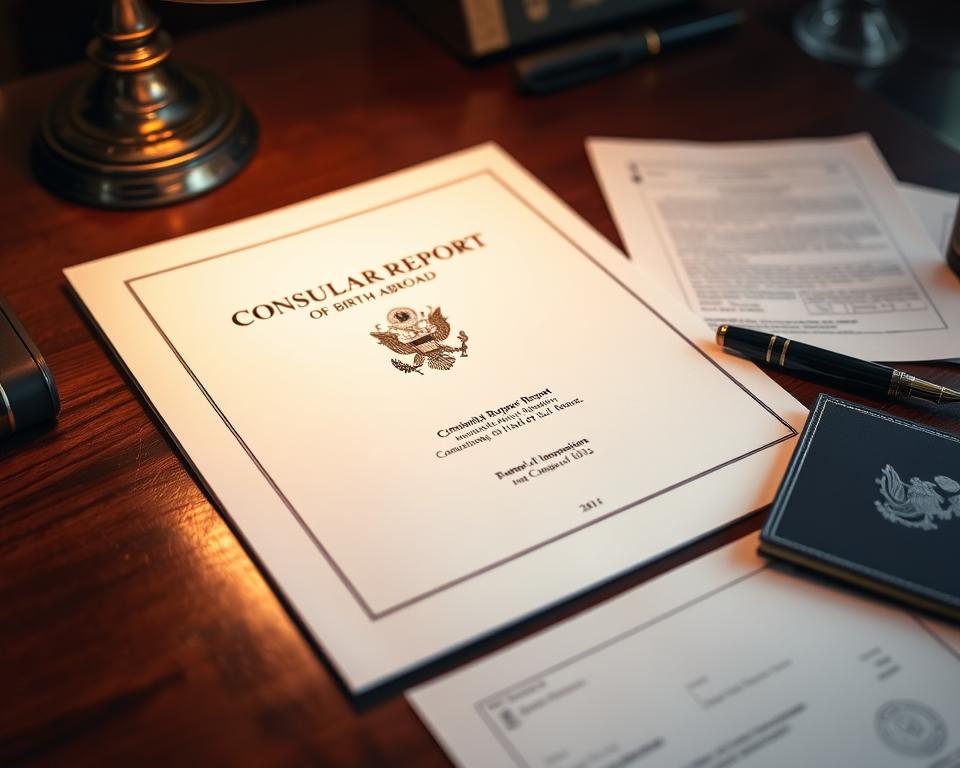
When applying for baby citizenship after international surrogacy, clear documents are key. The U.S. embassy or consulate needs proof of citizenship for the child. They also check if the intended parents meet legal and residency rules.
Start with the Consular Report of Birth Abroad and passport forms. The CRBA confirms the child’s U.S. citizenship and starts the review. If citizenship is confirmed, the passport application for the child can be filed at the same time.
Required identity and citizenship evidence
Parents need to bring U.S. passports, naturalization certificates, birth certificates, and marriage records. The Department of State will ask for proof of identity for both parents and application fees. Have originals and certified copies ready, with translations and apostilles if needed.
Local birth records and hospital documents
A certified surrogacy birth certificate or local birth record is key for citizenship. Hospital birth summaries and discharge records document the birth. In some countries, the surrogate is listed as the mother, so more legal papers are needed.
Surrogate affidavits and relinquishment statements
Consulates often ask for notarized surrogate affidavits. These state consent, gestational role, or relinquishment of parental rights. The paperwork must follow local notarization rules and, when required, include apostilles.
DNA testing and gestational evidence
When the genetic connection is unclear, DNA test results can prove parentage. The embassy may require chain-of-custody procedures and laboratory accreditation. Medical records from the IVF clinic and prenatal notes support a gestational link.
Parentage orders, court judgments, and notarized legal documents
Many intended parents get pre- or post-birth parentage orders or adoption decrees. These court judgments are persuasive in a CRBA surrogacy review. If local law treats the surrogate as the legal mother, custody or guardianship orders may be needed.
Practical handling and supporting evidence
Bring originals, certified copies, English translations, and apostilles when applicable. Also, show documentation of U.S. physical presence for the transmitting parent. The Department of State requires evidence that the parent transmitting citizenship meets the INA presence rules.
| Document | Why it matters | Tips for submission |
|---|---|---|
| Consular Report of Birth Abroad (CRBA) | Official record that the child acquired U.S. citizenship at birth | Apply at the U.S. embassy/consulate; bring parents’ IDs and citizenship evidence |
| U.S. passport application | Allows international travel once citizenship is proven | File with CRBA or after citizenship proof; both parents usually sign |
| Surrogacy birth certificate | Local proof of birth; may list surrogate as mother | Obtain a certified copy; prepare surrogate affidavits or court orders if needed |
| Hospital records and IVF clinic notes | Verify gestational link and birth details | Include embryo transfer records and prenatal care notes; translate to English |
| Surrogate affidavit / notarized relinquishment | Shows consent and intent to transfer parentage | Get local notarization and apostille when required |
| DNA test results | Proves genetic relationship when needed | Use an accredited lab; follow the chain-of-custody steps accepted by the consulate |
| Parentage orders/court judgments | Establishes legal parent status in the birth country | Obtain certified copies and translations; present to the consulate for CRBA surrogacy cases |
| Proof of parents’ physical presence | Meets INA residence and presence requirements for citizenship transmission | Supply tax returns, employment records, school transcripts, or leases |
Practical steps to prepare before travel and during the post-birth process
Getting ready for a birth abroad means taking clear steps to protect your rights. It’s important to plan early to avoid surprises. This includes getting documents, legal advice, and arranging travel.

Planning before embryo transfer
First, check if your home country accepts surrogacy births. Some countries give citizenship right away, while others require more paperwork. Knowing this is key before starting.
Make sure the clinic is reliable and follows U.S. Department of State advice on IVF records. Mistakes in these records can harm your baby’s citizenship claim.
Get an immigration lawyer and a local family law attorney in the birth country early. They help with agreements, documents, and citizenship steps.
Coordinating with clinics, lawyers, and your embassy
Ask for detailed medical records that prove the birth. These records are important for embassy filing.
Reach out to the U.S. embassy or consulate early. They can tell you what documents are needed and how to apply for a passport.
Prepare parental declarations and pre-file any forms you can. This makes the legal process smoother.
Applying for anticipated travel documents before the due date
Apply for travel documents early if you’re unsure of the birth date. Some suggest filing two months before the due date.
Travel documents can help you leave sooner if your citizenship is clear. Check with your consulate for the right steps.
Have court orders or affidavits ready quickly after birth. This ensures your baby has the right documents.
Post-birth checklist
Use a checklist to move from hospital care to travel eligibility. Get the hospital birth certificate and discharge summary first.
Get the local civil birth certificate and arrange translations or apostilles if needed. If required, file for a parentage order or adoption decree.
Do DNA testing if asked, and then submit the CRBA and passport application. Make sure to have all the necessary documents and fees.
Get your child’s U.S. passport, emergency passport, or travel permit. Use the checklist to stay on track and follow embassy guidance.
| Task | Timing | Why it matters |
|---|---|---|
| Verify home country recognition | Before embryo transfer | Determines eligibility for overseas baby citizenship and the needed legal steps |
| Engage attorneys (U.S. and local) | Before transfer | Prepares contracts, parentage strategy, and embassy liaison during the international surrogacy legal process |
| Obtain detailed medical records | During pregnancy | Establishes gestational facts for CRBA and parentage evidence |
| Apply for anticipated travel documents | ~2 months before due date if eligible | Speeds departure and reduces stress if the citizenship pathway is clear |
| Complete post-birth checklist (certificates, DNA, CRBA) | Immediately after birth | Ensures timely embassy submission and smoother passport or travel permit issuance |
| Collect translations, apostilles, and court orders | Within first weeks after birth | Meets consular proof requirements for applying for baby citizenship |
Common legal hurdles and how to solve them in the international surrogacy legal process
International surrogacy can lead to unexpected legal challenges. These can affect travel, documents, and who is considered the legal parent. It’s important to plan your legal steps early to avoid these risks.
Circumstances where the surrogate is the legal mother
In some countries, the woman who gives birth is listed as the legal mother. This can make it hard to get a passport in the intended parents’ names. To solve this, you can get a local parentage order or court judgment that gives the intended parents legal rights.
Local courts can issue a quick custody or guardianship order. This order can help get temporary travel documents. Working with a surrogacy citizenship lawyer in the host country ensures these orders are recognized by U.S. officials.
Cases with donated gametes or no genetic connection
If the child doesn’t have a genetic link to a U.S. parent because of donated gametes, U.S. citizenship at birth might not apply. This can make it hard to get visas and affect CRBA decisions.
When there is a genetic link, DNA evidence is key. Clinics should provide detailed documentation of how gametes were handled. This helps avoid disputes over who the parents are and supports claims at the consulate.
When to obtain a parentage or adoption order
Parentage and adoption orders are often needed when local laws don’t recognize intended parents. A surrogacy parentage order can establish legal parentage. It also helps the consulate accept CRBA and passport applications.
In some places, adoption is the only way for intended parents without a genetic or gestational tie. Adoption timelines vary by country. They can affect when a child can get a U.S. passport or citizenship.
How coordinated legal services reduce delays and visa refusals
Working with immigration attorneys for surrogacy can speed up the process. They prepare the right agreements, court filings, and embassy submissions. They know the local rules and what the U.S. consulate expects, reducing the chance of last-minute refusals.
Having a surrogacy citizenship lawyer and U.S.-experienced immigration attorneys can make CRBA and passport wait times shorter. They arrange DNA testing, file parentage orders, and provide clear documentation of parental rights after international surrogacy.
Coordinating with clinics, local counsel, and U.S. consular services is key. This approach helps intended parents focus on caring for their child while legal teams handle complex issues.
Surrogacy citizenship by country: differences, timelines, and practical examples
Surrogacy laws vary by country. Expect different rules and timelines based on local laws and embassy workloads. This section compares common paths and gives practical examples for planning travel and legal steps.
United States CRBA timelines
In the U.S., parents need a Consular Report of Birth Abroad. This must be filed at a U.S. embassy or consulate. The process time depends on the embassy’s workload and how complete your documents are.
Consular officers check for genetic or gestational links, parents’ presence records, and U.S. citizenship proof. DNA testing might be needed to show genetic ties. The consulate has rules for DNA testing and approved labs.
When documents and parentage orders are ready, some posts can issue a CRBA and passport in 7–14 days. But slower cases can take weeks.
Canada surrogacy citizenship
Canada grants citizenship to children born there. Babies born in Toronto or Vancouver usually qualify at birth. Passport services are handled by Immigration, Refugees and Citizenship Canada and provincial vital records offices.
You’ll need a certified Canadian birth certificate, hospital records, and parentage orders if required. Coordinated legal and consular help usually gets passports in 10–21 days. But if court proceedings are needed, it can take longer.
Countries with citizenship by descent or complex recognition rules
Many countries grant citizenship by descent, not birthplace. Israel, Spain, India, and the United Kingdom each have their own rules. Some need court orders or adoption to recognize parents.
Processing times vary from weeks to months. Expect 2–26 weeks for cases involving court orders, translations, and foreign legalizations.
Case examples and average turnaround times
Real-life examples help set expectations. U.S. cases often resolve in 7–14 days with complete documents and DNA. Canada can take 10–21 days for passports with the right documents.
An Israeli couple in Toronto got citizenship and documents in about 14 days with help. But other cases can take up to six months with extra steps.
| Country/Path | Typical Documents | Common Timeline | Notes on dual citizenship for surrogacy babies |
|---|---|---|---|
| United States (CRBA) | Foreign birth certificate, hospital record, parent IDs, proof of U.S. physical presence, DNA (if needed), parentage order | 7–14 days (expedited when complete); up to several weeks if issues arise | Dual citizenship for surrogacy babies is possible if the birth country allows it; the U.S. recognizes dual citizenship, but parents must confirm both countries’ rules |
| Canada (birthright) | Canadian birth certificate, hospital records, provincial parentage order (if required) | 10–21 days for passport processing with coordinated services; longer if court steps are needed | Many infants born in Canada hold Canadian citizenship at birth and may also qualify for the parents’ citizenship, enabling dual citizenship for surrogacy babies |
| Citizenship by descent (examples: Israel, Spain, UK) | Parents’ proof of citizenship, genetic evidence, local parentage recognition, translations, apostilles | 2–26 weeks, depending on legal complexity and court requirements | Dual citizenship depends on both states’ laws; some require formal recognition of parentage before granting descent-based citizenship |
| Jurisdictions listing the surrogate as mother | Court parentage order or adoption decree, DNA, embassy consular filings | Several weeks to many months due to court processes | Dual citizenship for surrogacy babies may be delayed until parentage is legally transferred |
Surrogacy citizenship timelines depend on document completeness, DNA results, parentage orders, and embassy capacity. A well-planned approach with legal and consular help can shorten waits and reduce travel risks.
Additional Resources to read:
Who Can Be a Surrogate Mother in Mumbai
Find a surrogate yourself vs an agency-provided surrogate
Surrogacy Cost Comparison Internationally
How Much Does a Surrogate Mother Cost in Colombia
Conclusion
Getting citizenship for a baby born through international surrogacy needs early planning and detailed records. Parents should check if their country accepts surrogacy before the embryo transfer. They also need to work with experienced immigration lawyers and fertility clinics to avoid problems.
It’s important to keep IVF and medical records safe. Parents should also get birth and hospital documents. They must be ready for DNA tests and follow the steps for parentage or adoption if needed.
Applying for a Consular Report of Birth Abroad and a U.S. passport is key. The Department of State advises talking to an immigration lawyer early. This helps avoid delays and ensures a smooth return home.
How long it takes to get citizenship varies by country and situation. So, it’s wise to plan for unexpected delays. Keeping all documents in order helps protect parental rights and the child’s travel options.
💫 Why Intended Parents Choose Complete Surrogacy for a Safe, Smooth & Successful Surrogacy Journey:
🌍 Access to multiple surrogacy destinations with 15+ years of international experience
🏥 Partnerships with top-tier fertility clinics and agencies, backed by references from past clients
👩🦱 Diverse egg donor options: Asian, Caucasian, African, Oriental, and more
💸 Transparent and affordable pricing—direct payments with no extra agency fees
🔒 No hidden costs—all charges are agreed upon upfront
🤝 Dedicated case manager for personalized support
📲 Fast, honest, and clear communication throughout
📑 Full legal support for visas, documentation, and baby exit processes
🚚 Assistance with frozen sperm/embryo shipment logistics

FAQ for Baby’s Citizenship After International Surrogacy
What is this guide’s purpose, and who is it for?
This guide helps U.S. parents-to-be with international surrogacy. It covers how to get U.S. citizenship and travel documents for their child. It talks about eligibility, needed documents, and how to plan before and after birth.
How does a child born abroad through surrogacy obtain U.S. citizenship at birth?
A child can get U.S. citizenship at birth if certain rules are met. At least one U.S. citizen parent must have a genetic or gestational link. They also need to meet U.S. physical presence requirements.
What key legal concepts should intended parents understand?
Parents need to know about genetic and gestational parents. They also need to understand parentage, which is legal recognition under local law. Physical presence or residence requirements for transmitting citizenship also apply and vary by birth date and statute.
Why does surrogacy raise special documentation and citizenship questions?
Surrogacy involves different laws in various places. This can make getting citizenship and documents tricky. Embassies might ask for proof of conception, birth, and parentage.
Who is eligible to transmit U.S. citizenship to a surrogacy-born child?
Usually, at least one U.S. citizen parent must have a genetic or gestational link to the child. If neither parent has such a link, the child generally won’t get U.S. citizenship at birth.
What are the relevant U.S. statutes I should know?
The main statutes are Section 301 of the Immigration and Nationality Act (acquisition of citizenship by birth abroad) and Section 309 (rules for children born out of wedlock). Department of State guidance interprets these statutes for CRBA and passport issuance.
What if the child does not automatically acquire U.S. citizenship at birth?
If statutory requirements are unmet, next steps may include filing a CRBA if any eligibility exists, completing DNA testing to prove genetic ties, obtaining local parentage orders or an adoption, and pursuing naturalization or other immigration pathways later.
What documents are required for a CRBA and U.S. passport application?
Typical requirements include the child’s certified local birth certificate and hospital records, parents’ U.S. citizenship evidence (U.S. passports or naturalization certificates), proof of parents’ identity, marriage certificate if applicable, evidence of U.S. physical presence/residence (tax records, employment, school transcripts), and applicable fees.
Will DNA testing be required?
DNA testing is frequently requested when a genetic relationship is unclear or when consular officers need confirmation. Tests must follow consulate-approved chain-of-custody procedures and use accredited laboratories acceptable to the embassy or consulate. DNA provides definitive proof of a genetic parent-child link when needed.
How do local birth certificates and surrogate affidavits affect the process?
Local birth certificates may list the surrogate as the mother in some countries. Surrogate affidavits or notarized declarations documenting gestation, consent, and relinquishment can be required. Where the surrogate is recorded as the legal mother, intended parents often need local parentage or custody orders to establish legal parent status for consular recognition and to obtain exit documents from the birth country.
When should intended parents obtain a parentage order or adoption decree?
Parentage or adoption orders are often necessary where local law does not recognize intended parents as legal parents. Such orders (pre- or post-birth, depending on jurisdiction) are persuasive to consular officers and are frequently required for issuing passports or CRBAs. Adoption may be required if no genetic or gestational connection exists; adoption timelines and implications for citizenship vary by country.
What should parents do before embryo transfer to reduce citizenship risks?
Verify whether the intended parents’ home country recognizes surrogacy births and how it treats parentage and citizenship. Confirm clinic reliability and insist on chain-of-custody documentation for gametes to avoid substitution or inappropriate use of donated gametes. Engage an immigration attorney and local family law counsel in the birth country before transfer to prepare surrogacy agreements and anticipate documentation needs.
How should parents coordinate with clinics, lawyers, and the U.S. embassy?
Request complete IVF and medical documentation that proves embryo transfer, conception details, prenatal care, and delivery specifics. Coordinate early with the U.S. embassy or consulate to obtain the list of required documents, acceptable DNA labs, and consular procedures for CRBA and passports. Prepare parental declarations and pre-file documents where possible to speed post-birth processing.
Can parents apply for anticipated travel documents or emergency travel certificates before birth?
Some embassies and legal teams recommend applying for anticipated travel documents or emergency travel certificates shortly before the due date to speed departure if the child’s citizenship pathway is clear. Procedures and acceptance vary by embassy and birth country; parents should confirm local consular rules and have court orders or affidavits ready if they cannot be issued before delivery.
What is the post-birth checklist for obtaining citizenship and travel documents?
Immediately obtain hospital birth summaries, secure the local civil birth certificate (with certified copies, translations, and apostilles as required), pursue a parentage order or adoption if needed, complete consulate-approved DNA testing if requested, submit the CRBA and child passport application to the U.S. embassy or consulate with originals, and obtain exit documents from the birth country. Keep originals and certified copies of every legal and medical document.
How long does CRBA and passport processing take?
Timelines vary widely by embassy, country, and case complexity. Coordinated legal support can shorten processing—examples from service providers show U.S. CRBA/passport processing in roughly 7–14 days in some locations when documentation and legal orders are in order; Canada often takes about 10–21 days. Other countries can take from a few weeks up to several months, depending on local court processes and embassy workload.
What happens when the surrogate is the legal mother under local law?
If local law treats the birth mother as the legal mother, the birth certificate may list the surrogate as parent and the child may not receive a passport in the intended parents’ names. Solutions include obtaining a local parentage or court order transferring parental rights to intended parents, filing for custody or guardianship recognized by the U.S. consulate, or completing a local adoption where required.
What if both gametes were donated and the child has no genetic link to a U.S. parent?
If neither intended parent has a genetic or gestational link, the child generally will not acquire U.S. citizenship at birth. Intended parents may need to pursue adoption under local law or later naturalization routes. Early legal counsel and pre-planning can identify available immigration pathways and minimize unexpected obstacles.
How do immigration attorneys and coordinated legal services help?
Experienced immigration and family law attorneys ensure surrogacy agreements comply with local law, draft necessary court petitions, coordinate consular submissions, expedite DNA testing with acceptable chain-of-custody, and assemble complete documentation. This reduces the risk of noncompliant arrangements, shortens processing times, and lowers the chance of consular refusals or travel delays.
How do country rules differ—what should parents expect by country?
Country practices vary: the United States requires CRBA and applies INA physical presence rules with common embassy DNA protocols; Canada grants citizenship at birth with provincial parentage rules and relatively quick passport timelines (often 10–21 days with coordinated support); other countries (Israel, Spain, India, the UK and others) have mixed systems—some rely on descent, some require court parentage orders, and processing times can range from weeks to months. Parents must check the birth country’s surrogacy and citizenship rules in advance.
What practical steps protect parental rights and the child’s travel options?
Key steps include: verify home-country surrogacy acceptance before embryo transfer; retain experienced immigration and local family law counsel; require chain-of-custody documentation from clinics; preserve full IVF and medical records; be prepared for consulate-approved DNA testing; obtain parentage or adoption orders where needed; and file for CRBA and a U.S. passport promptly after birth. Early coordination with the U.S. embassy reduces delays and risks.

Highly esteemed, authoritative, and trusted professional with a 14-year of experience in international surrogacy. Advocate for Secure, Legal, and Affordable International Surrogacy.
Neelam Chhagani, MA (Counselling Psychology) and Holistic Infertility and Third-Party Reproduction Consultant.
Member of European Fertility Society, Best Surrogacy Blogger of 2020, with 300 dedicated blogs, and top contributor on Quora for Surrogacy.
Add Your Comment