
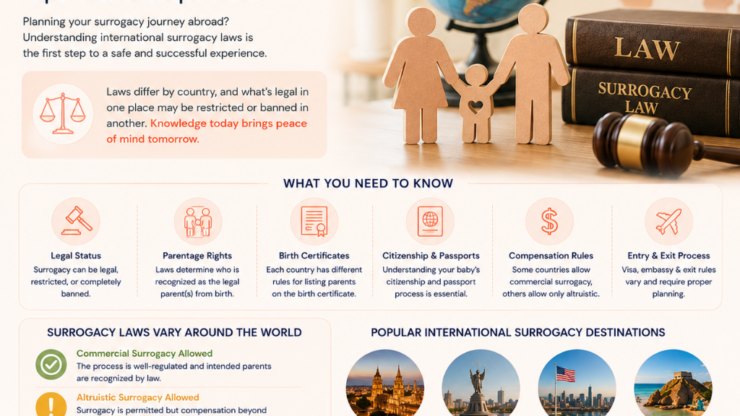
International surrogacy laws explained in simple terms means understanding that surrogacy rules change from country to country, and what is legal in one place may be restricted or banned in another. Some countries, like United States and Georgia, clearly allow surrogacy with contracts that protect intended parents’ rights, while others permit only altruistic arrangements or limit eligibility based on marital status or citizenship. In places such…
Legal alternatives for intended parents in countries where surrogacy is banned provide safe and ethical pathways to parenthood when traditional surrogacy isn’t an option. Many families turn to solutions such as international surrogacy in legally supportive countries, domestic or international adoption, embryo donation, or co-parenting arrangements, depending on what their laws allow. Each alternative has its own legal requirements, timelines,…
Did you know nearly 1 in 5 women in the United States will face infertility at some point? This highlights the growing need for ethical surrogacy as a family-building option. In Georgia, commercial surrogacy has been legal for over two decades. This legal status offers stability and assurance, enabling families to grow ethically. Agencies like SILK Medical are key in…