
Navigating the IVF surrogacy process requires a clear understanding of each stage, from medical preparation to legal coordination. The journey typically begins with fertility testing and IVF to create embryos using the intended parents’ or donors’ eggs and sperm, followed by thorough medical and psychological screening of the surrogate. Once legal agreements are finalized, the healthiest embryo is transferred to the surrogate’s uterus, and the pregnancy is carefully monitored until delivery.
With proper medical planning, transparent communication, and experienced legal support, navigating the IVF surrogacy process becomes more structured, predictable, and emotionally manageable for intended parents.
Key Takeaways
- The IVF surrogacy process offers a solution for couples facing challenges in conceiving.
- Gestational surrogacy allows intended parents to use their own or donor eggs and sperm to create embryos.
- A thorough understanding of the legal and medical aspects is vital in the surrogacy journey.
- Choosing the right surrogacy agency is a crucial first step.
- Success rates vary based on several factors, making preparation essential.
📞 Get in Touch for a Free Surrogacy Consultation
📱 +91-8800481100 (WhatsApp | LINE | Viber)
📧 neelam@ivfconceptions.com
🌐 www.georgiasurrogacyagency.com

Understanding the IVF Surrogacy Process
Entering the surrogacy journey requires understanding the foundational concepts of surrogacy and IVF. This knowledge reveals the options available and the implications for intended parents and surrogates alike.
Definition of Surrogacy and IVF
Surrogacy is a reproductive method where a woman, referred to as the surrogate, carries a pregnancy for intended parents. In vitro fertilization (IVF) refers to the process of fertilizing an egg with sperm outside the human body. After fertilization, the embryo is placed into the surrogate’s uterus, allowing her to carry the pregnancy.
Difference Between Gestational and Traditional Surrogacy
Two main types of surrogacy exist: gestational surrogacy and traditional surrogacy. In gestational surrogacy, the surrogate has no genetic link to the child, as the embryo originates from the intended parents’ or donors’ eggs and sperm. Traditional surrogacy, in contrast, utilizes the surrogate’s eggs, establishing a biological connection with the child. Due to this connection, traditional surrogacy often involves complex legal and emotional considerations.
Who Can Benefit from the IVF Surrogacy Process?
The IVF surrogacy process can provide a solution for various individuals and couples. Candidates often include:
- Women are unable to carry a pregnancy due to health issues, such as a hysterectomy or an absent uterus.
- Same-sex male couples or single fathers hoping to achieve parenthood.
- Couples with previous unsuccessful IVF attempts or medical conditions impacting their ability to carry a child.
Knowing the surrogacy process timeline can greatly assist potential parents and surrogates in making informed decisions throughout this crucial journey.
Key Steps in the IVF Surrogacy Process
Understanding the key steps in the IVF surrogacy process will help intended parents navigate their journey smoothly. Initial efforts focus on selecting a supportive and reputable surrogacy agency. Following this, potential surrogates undergo thorough medical and psychological screening, which plays a vital role in determining their suitability. Legal aspects cannot be overlooked; thus, the surrogacy legal process involves drafting comprehensive contracts that clearly delineate rights and responsibilities.
Selecting a Surrogacy Agency
Choosing the right surrogacy agency is a critical first step. An effective agency will manage various aspects, including:
- Matching intended parents with suitable surrogates
- Coordinating medical and psychological evaluations
- Navigating the surrogacy legal process, ensuring compliance with state laws
Medical and Psychological Screening for Surrogates
Once the agency is selected, the next phase involves medical and psychological screenings for potential surrogates. These evaluations assess:
- Overall health, ensuring candidates meet surrogate mother requirements
- Mental health status to gauge emotional readiness for carrying a pregnancy
- History of previous pregnancies, if applicable, to ensure experience and well-being
These assessments contribute significantly to the chances of a successful surrogacy journey.
Legal Considerations and Contracts
The surrogacy legal process entails preparing contracts that outline the roles and responsibilities of both the intended parents and the surrogate. Key elements often addressed in these contracts include:
- Compensation for the surrogate, compliant with state laws
- Medical responsibilities and decision-making powers during pregnancy
- Provisions for parental rights and responsibilities after birth.
Comprehensive legal agreements help protect the interests of all parties while clarifying expectations throughout the surrogacy journey.
The IVF Surrogacy Procedure Explained
The IVF surrogacy procedure is a structured series of steps essential for creating an embryo that a surrogate will carry. This process involves meticulous planning and medical intervention to ensure successful outcomes. Understanding each component, such as the egg retrieval, fertilization, and embryo transfer, provides clarity on how surrogacy can be an effective pathway to parenthood.
Egg Retrieval Process
The first step in the surrogacy treatment process is the egg retrieval process. This phase involves hormone therapy to stimulate the ovaries of the intended mother or egg donor, allowing the collection of mature eggs. An experienced fertility specialist performs a minimally invasive procedure to collect these eggs, often under ultrasound guidance. Many individuals report quick recovery times, permitting them to return to their routine activities shortly after the procedure.
Fertilization and Embryo Development
Following egg retrieval, fertilization takes place in a laboratory setting. The choice between traditional IVF and ICSI (intracytoplasmic sperm injection) will depend on specific circumstances surrounding the case. Over the next few days, embryologists monitor the embryo development, selecting the most viable embryos suitable for the next phase. This evaluation is critical, as high-quality embryos are more likely to succeed during the surrogacy implantation process.
Embryo Transfer Process and Timing
The final step in the IVF surrogacy procedure is the embryo transfer process. It typically occurs after three to six days of embryo growth when embryos are at the appropriate developmental stage. This straightforward procedure involves transferring one or more embryos into the surrogate’s uterus. It does not require anesthesia, and clear instructions will be provided to ensure a smooth experience. After the transfer, the waiting period begins, leading to pregnancy tests to confirm success.
IVF Surrogacy Steps: A Detailed Timeline
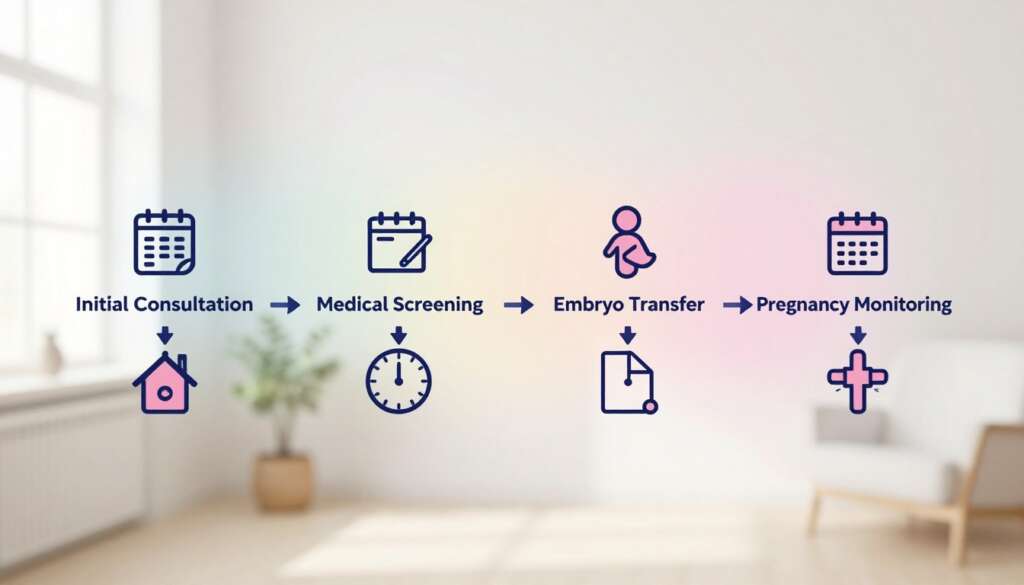
The IVF surrogacy timeline involves several critical phases that shape the overall surrogacy journey. Understanding these steps is essential for intended parents and surrogates alike. This section provides a comprehensive overview of pre-transfer preparations, monitoring the pregnancy, and post-birth arrangements.

Pre-Transfer Preparations for the Surrogate
Before embryo transfer, the surrogate undergoes a series of preparations aimed at ensuring optimal conditions for success. Fertility medications play a crucial role during this stage, helping to prepare the uterus for implantation. Typically, this phase occurs several weeks in advance of the transfer, focusing on nurturing the body’s readiness for a surrogacy pregnancy.
Monitoring the Pregnancy
After the embryo transfer, monitoring the pregnancy is paramount. The surrogate will attend regular medical appointments to track the health and development of the pregnancy. Care during this timeframe generally continues until she reaches about 10 to 12 weeks of gestation, with oversight provided by either her OB or the fertility clinic. This dedicated approach reinforces the importance of support and care throughout the surrogacy journey.
Post-Birth Arrangements
Following the birth, several post-birth arrangements require careful consideration. The handover of the newborn to the intended parents marks a significant moment in the surrogacy process. Alongside this, communication standards between the surrogate and the family should align with agreements established beforehand. These discussions are essential for fostering a positive connection post-delivery.
Cost of IVF Surrogacy: What to Expect
The financial aspect of IVF surrogacy can be complex, often leading to questions about specific expenses involved. Understanding surrogacy costs helps individuals and couples to plan better for this significant investment in their family. The cost of ivf surrogacy typically varies, but it is crucial to break down the components that contribute to the total expenditure.
Breakdown of Surrogacy Costs
When evaluating the surrogacy and IVF cost, several key components come into play, each contributing to the overall financial commitment. Below is a comprehensive breakdown:
| Cost Component | Estimated Range |
|---|---|
| Agency Fees | $15,000 – $30,000 |
| Medical Costs (IVF Procedures) | $20,000 – $50,000 |
| Legal Fees | $5,000 – $15,000 |
| Surrogate Compensation | $30,000 – $60,000 |
Insurance Considerations
Understanding Surrogacy insurance coverage is vital to managing the cost of IVF surrogacy. Some insurance plans may cover aspects of the surrogacy journey, while others might not. It’s essential to check:
- The surrogate’s health insurance policy.
- Potential gaps in coverage that may result in out-of-pocket expenses.
- Any additional insurance options that can be secured to mitigate costs.
Finding the Right Surrogate Mother
Finding a surrogate requires careful consideration of various aspects to ensure a successful partnership. Both intended parents and surrogates should approach this journey with clarity on expectations and open communication.
Qualities to Look For in a Surrogate
When assessing surrogate mother requirements, focus on the following qualities:
- Reliability: A surrogacy journey involves numerous appointments and commitments, so dependability is essential.
- Emotional Stability: A surrogate should have a strong support system and demonstrate emotional readiness for the process.
- Open Communication: The ability to communicate concerns and updates effectively contributes to a positive experience for all parties.
- Shared Values: Aligning expectations regarding medical decisions and post-birth contact helps foster trust.
How to Approach the Matching Process
The matching process involves working with a reputable surrogacy agency that streamlines the process of finding a surrogate. This involves evaluating compatibility based on:
- Personal values and beliefs
- Geographical location
- Shared experiences or reasons for pursuing surrogacy
Establishing a connection during initial meetings reflects the potential for a trusting relationship, ensuring a smoother journey for everyone involved.
Communication Guidelines with Your Surrogate
Clear surrogacy communication guidelines are essential to keep expectations aligned. Key points to discuss include:
- How often will updates be shared throughout the pregnancy
- The level of interaction desired post-birth
- Emergency decision-making protocols, if needed
This mutual understanding fosters a supportive environment, promoting a successful and collaborative experience for both intended parents and their surrogate.

Surrogacy and IVF Success Rates
Understanding the dynamics of surrogacy success rates is crucial for intended parents navigating the IVF surrogacy journey. Several factors can influence these rates, and knowing how to enhance the likelihood of a successful outcome can provide peace of mind during this process.
Factors Influencing Success Rates in IVF Surrogacy
Several key elements impact IVF surrogacy success rates:
- Age and Health of the Egg Provider: Younger egg providers generally contribute to higher success rates.
- Quality of Embryos: The health and viability of the embryos created play a significant role in determining outcomes.
- Surrogate’s Medical History: A comprehensive evaluation of the surrogate’s health and past pregnancies can influence success.
- Fertility Clinics’ Expertise: Clinics with higher success metrics often indicate more experienced specialists and advanced technology.
How to Maximize Success in Your Surrogacy Journey
Maximizing success requires strategic actions at various stages:
- Focus on preconception health: Both intended parents and surrogates should prioritize health before beginning the surrogacy process.
- Engage with experienced fertility specialists: Their expertise can guide critical decisions for optimizing success rates.
- Consider preimplantation genetic testing (PGT): This process helps select the healthiest embryos, improving the odds of a successful pregnancy.
Additional Resources to read:
IVF Clinics vs Surrogacy Clinics
Difference Between IVF and Surrogacy
Conclusion
The IVF surrogacy process offers a unique and compassionate avenue for many individuals and couples seeking to create their families. As you embark on this journey, it’s essential to understand the intricate steps involved—medical, legal, and financial. Each phase requires careful preparation and informed decision-making to ensure a seamless experience.
Awareness of the various facets of the IVF surrogacy process empowers intended parents to navigate their path with confidence. By prioritizing open communication and collaboration with knowledgeable agencies and practitioners, families can foster a supportive environment that respects the needs and contributions of all parties involved.
Ultimately, the IVF surrogacy process is not solely about bringing a child into the world; it’s about building meaningful relationships and creating joy. By embracing this remarkable option, you open the door to hope and fulfillment in your family’s journey.
💫 Why Intended Parents Choose Complete Surrogacy for a Safe, Smooth & Successful Surrogacy Journey:
🌍 Access to multiple surrogacy destinations with 15+ years of international experience
🏥 Partnerships with top-tier fertility clinics and agencies, backed by references from past clients
👩🦱 Diverse egg donor options: Asian, Caucasian, African, Oriental, and more
💸 Transparent and affordable pricing—direct payments with no extra agency fees
🔒 No hidden costs—all charges are agreed upon upfront
🤝 Dedicated case manager for personalized support
📲 Fast, honest, and clear communication throughout
📑 Full legal support for visas, documentation, and baby exit processes
🚚 Assistance with frozen sperm/embryo shipment logistics

FAQ: Navigating the IVF Surrogacy Process
What is the IVF surrogacy process?
The IVF surrogacy process involves advanced fertility treatments where a surrogate, or gestational carrier, carries a pregnancy for intended parents through in vitro fertilization (IVF). This includes steps like selecting a surrogate, medical procedures, and legal arrangements.
What are the main steps involved in the IVF surrogacy process?
The main steps are selecting a surrogacy agency, completing medical and psychological screenings for surrogates, legal considerations and contracting, egg retrieval, fertilization of eggs, embryo transfer, monitoring the pregnancy, and making post-birth arrangements.
How does the matching process with a surrogate work?
The matching process with a surrogate typically involves working with a surrogacy agency, which assesses compatibility based on shared values and experiences to ensure a trusting relationship between the intended parents and the surrogate.
What are the costs associated with IVF surrogacy?
The total cost of IVF surrogacy generally ranges from $100,000 to $150,000, covering agency fees, medical expenses, legal costs, and surrogate compensation. It’s important to understand the insurance coverage regarding these costs as well.
What legal considerations need to be addressed in the surrogacy process?
Legal considerations in a surrogacy arrangement include preparing contracts that outline each party’s rights and responsibilities, ensuring compliance with state laws, and establishing legal parentage before or after birth.
What are the success rates for IVF surrogacy?
Success rates for IVF surrogacy can vary based on factors such as the age and health of the egg provider, the quality of embryos, and the surrogate’s medical history. Generally, younger egg providers have higher success rates.
How can intended parents maximize their success in surrogacy?
Intended parents can maximize success by focusing on preconception health, working with experienced fertility specialists, following recommended protocols, and considering preimplantation genetic testing (PGT) to select healthier embryos.
What support is available for intended parents during the surrogacy journey?
Support is available from knowledgeable surrogacy agencies, medical professionals, and legal advisors who can provide guidance throughout the process, helping intended parents navigate the complexities of surrogacy.

Highly esteemed, authoritative, and trusted professional with a 14-year of experience in international surrogacy. Advocate for Secure, Legal, and Affordable International Surrogacy.
Neelam Chhagani, MA (Counselling Psychology) and Holistic Infertility and Third-Party Reproduction Consultant.
Member of European Fertility Society, Best Surrogacy Blogger of 2020, with 300 dedicated blogs, and top contributor on Quora for Surrogacy.
Add Your Comment