
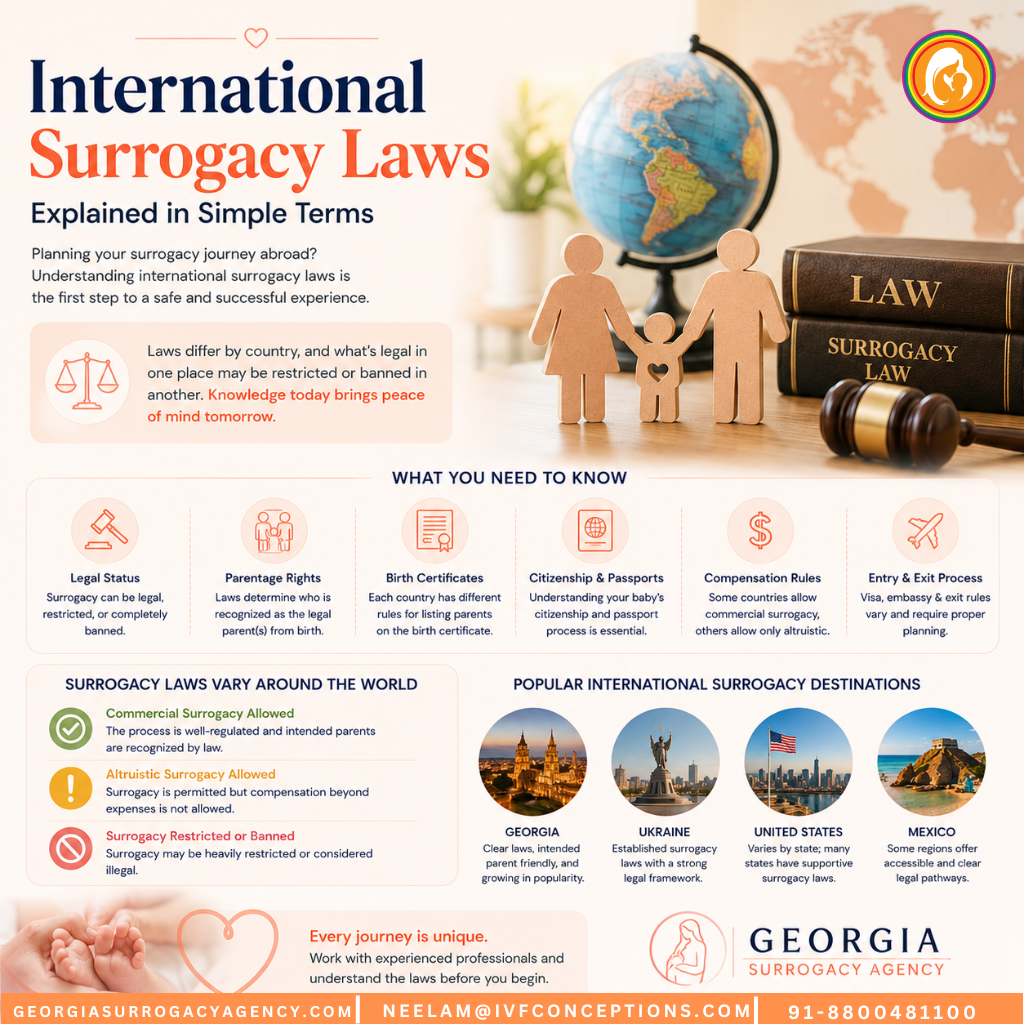
International surrogacy laws explained in simple terms means understanding that surrogacy rules change from country to country, and what is legal in one place may be restricted or banned in another. Some countries, like United States and Georgia, clearly allow surrogacy with contracts that protect intended parents’ rights, while others permit only altruistic arrangements or limit eligibility based on marital status or citizenship.
In places such as Mexico and Colombia, laws are shaped by court rulings rather than single statutes, making legal guidance especially important. In simple terms, international surrogacy is legal when local laws recognize intended parents as the legal parents at birth and provide a clear path for birth certificates and citizenship—this is why expert legal advice is essential before choosing any destination.
Key Takeaways
- You’ll get plain guidance to help you make informed decisions.
- Contracts and defined terms reduce disputes and protect all parties.
- Costs vary widely; budget for travel, legal work, and care.
- Some countries welcome the process; others restrict or prohibit it.
- Use experienced agencies and lawyers to align expectations and timelines.
📞 Get in Touch for a Free Surrogacy Consultation
📱 +91-8800481100 (WhatsApp | LINE | Viber)
📧 neelam@ivfconceptions.com
🌐 www.georgiasurrogacyagency.com
What International Surrogacy Is and Why Laws Matter
This section explains core types of third-party pregnancy and why legal rules change outcomes.
Gestational vs. traditional: plain language
Gestational arrangements involve an embryo made from the intended parents’ or a donor’s gametes. The carrier has no genetic link. That clarity usually makes legal parentage cleaner.
Traditional arrangements use the carrier’s egg. Because the carrier is the genetic mother, courts may treat parentage differently. Many programs prefer gestational paths for that reason.
Altruistic vs. commercial: what changes legally
Altruistic models typically allow reimbursement for approved medical expenses, legal fees, and reasonable pregnancy costs. Commercial models add compensation beyond expenses and face stricter rules or bans in many countries and some U.S. states.
| Feature | Gestational | Traditional |
|---|---|---|
| Genetic link | Usually no | Yes (carrier) |
| Parentage clarity | Higher | Lower |
| Typical legal issues | Contract enforceability | Parentage disputes |
Practical example: A shift from altruistic to commercial can render agreements void in some countries, change which courts enforce the terms, and alter how expenses are documented.
- Regulations vary by country and state, so intended parents must confirm local rules.
- Agencies and clinics must tailor contracts to match the applicable law and reduce risk.
International Surrogacy Laws Explained in Simple Terms
How differing regulations shape the surrogacy process across borders
Cross-border rules form the roadmap for every step: who can be named a parent, what payments are allowed, and how long paperwork will take.
What changes when rules differ
One regulatory tweak (for example, a new court requirement) can lengthen screening, alter contract language, or require post-birth parentage orders. That shift often raises the total cost and the time to bring a child home.
Enforceability varies: some countries treat agreements as valid contracts; others void them or ban specific payments (including commercial surrogacy). That difference affects whether parents get immediate legal recognition or must pursue a post-birth path.
- Defined terms (intended mother, carrier, donor) reduce disputes between the parties.
- Cross-border pain points: document legalization, translation, notarization, and medical records access.
- Choose an agency familiar with the country to stay compliant and save time.
Quick checklist when comparing countries: enforceability, parentage path, medical oversight, and document demands.
The Ultimate Guide Roadmap: From First Question to Bringing Baby Home
Start by mapping the legal and medical checkpoints so you can ask the right questions from day one. That early orientation clarifies eligibility, screening, and realistic timelines before you choose a country or program.
Break the journey into clear phases for intended parents: early consults, country and program selection, medical and legal screening, embryo creation and transfer, pregnancy milestones, delivery, and post-birth paperwork.
Build time buffers for contingencies (extra IVF cycles, legal reviews, appeals). These buffers keep the process steady when plans shift and protect your schedule and budget.
“Plan each handoff—clinic to carrier’s care team to local lawyer—so nothing is delayed at delivery or discharge.”
Document checklist: medical reports, signed agreements, consent forms, and who holds originals versus certified copies. Schedule parentage steps before the due date to smooth the hospital exit and travel with your child.
- Coordinate finances with medical and legal milestones.
- Arrange pediatric care and local registration before returning home.
- Keep a central, secure file of all documents and contacts.
Good planning reduces stress and supports better decisions for parents throughout the surrogacy journey.
The Legal Landscape at a Glance: Where It’s Allowed, Restricted, or Banned
Clear legal positions shape whether parentage, payments, and travel go smoothly or become risky.
Many European countries bar commercial arrangements because the EU framework and the Oviedo Convention prohibit financial gain. That rule pushes most European options into altruistic-only paths or outright bans.

Regions permitting commercial, altruistic, or neither
- EU and several Western states: commercial payments are broadly blocked; reimbursement-only models may be allowed.
- Australia and Canada: only altruistic programs are legal; some states criminalize engaging in commercial programs abroad.
- Other countries (listed below) ban all forms and treat attempts to circumvent the law as high-risk.
Countries with unclear or no regulations, and what that means
Some places (for example, the Czech Republic) lack clear statutes. Mexico shows a patchwork: many states and Mexico City have no uniform rules, while Sinaloa regulates specifically.
| Region | Typical stance | Practical note |
|---|---|---|
| European Union | Altruistic or banned | Commercial payments prohibited; parentage may need court steps |
| Australia / Canada | Altruistic-only | Reimbursement categories defined; criminal penalties for commercial deals |
| Unregulated zones | Unclear | Enforceability and parentage often require post-birth petitions |
“Choose a jurisdiction that matches your timeline, budget, and risk tolerance—and get local legal advice early.”
United States Overview: Surrogacy-Friendly States and State-by-State Variations
The U.S. state you choose can change timelines, court steps, and hospital procedures.
Clear paths to parentage in surrogate-friendly jurisdictions
Several jurisdictions (California, Florida, Connecticut, Delaware, New Hampshire, Arkansas, Washington D.C., New Jersey, Utah, Texas, Oregon, Rhode Island, and Maine) offer established procedures for pre-birth or post-birth parentage orders.
In these states, intended parents often secure recognition faster and face fewer surprises at discharge.
Restrictions and gray areas U.S. intended parents must navigate
U.S. laws vary by state. Some allow commercial surrogacy and structured compensation; others are less developed or restrict who can be listed on the birth record.
Hospital protocols, insurance rules, and court calendars differ, so local counsel and clinic coordination matter.
- Checklist: enforceability, speed of orders, insurance norms, and hospital administrative practices.
- Verify surrogate screening and informed consent rules where the transfer and delivery occur.
- Choose attorneys and clinics within the same state to reduce friction.
Plan travel and lodging early if your residence differs from the delivery state to avoid delays after birth.
Key Country Spotlights You Should Know Today
This spotlight compares select countries and what their approaches mean for your timeline, paperwork, and costs. Read this to shortlist places that match your risk tolerance and budget.
France, Germany, Spain: restrictive or prohibitive approaches
France and Germany prohibit surrogacy, and Spain is generally restrictive. Intended parents should avoid planning arrangements inside these borders to prevent legal and travel complications.
India: current restrictions for foreign intended parents
Since November 4, 2015, foreign commercial surrogacy has been banned in India. The Surrogacy (Regulation) Act, 2021, limits eligibility to certain domestic couples and some single women.
Georgia and Greece: permissive frameworks with safeguards
Georgia often recognizes intended parents at birth and has been friendly to some foreign cases, though review of foreign access was discussed in 2023. Greece requires pre‑approval by a family judge and lists intended parents on hospital and birth documents.
Mexico: state-level variation and practical steps
Rules vary by state; many lack clear regulation while places like Sinaloa have law. When a country’s state rules are unclear, expect extra translation, notarization, and post‑birth petitions.
Australia and Canada: altruistic-only models
Both countries allow reimbursement but criminalize commercial payment in many forms. That affects cross‑border planning and how payment structures are written.
- Practical tips: verify residency, medical, and marital requirements; align payment schedules with local regulations; consult local counsel early.
- These country notes affect timelines, clinic standards, and how quickly parents get legal recognition.
Parental Rights and Legal Parentage Across Borders
Establishing legal parentage early reduces delays at discharge and smooths travel home.
Pre-birth vs. post-birth orders and adoption alternatives
Pre-birth orders let intended parents be named on the birth record before delivery. That timing can speed hospital discharge and avoid a separate adoption.
Post-birth orders or a court adoption may be required where the local law does not recognize pre-birth recognition. That path can add weeks and paperwork and affect travel with your child.
Why clear definitions in agreements matter
Defined terms (intended mother, intended father, guardian, custody) protect all parties and reduce disputes over rights.
Contracts should align with the law where the surrogate lives and where you will reside. That alignment prevents conflicts between clinics, courts, and officials in different countries.
- Checklist for intended parents: confirm name-on-birth-record expectations and timing of orders relative to delivery.
- Attach informed consent, medical releases, and emergency guardianship clauses to support parental rights in court.
- Obtain local advice on guardianship and travel contingencies if childbirth happens early.
“Precise definitions and jurisdiction clauses are your best protection in cross-border arrangements.”
Citizenship and Documents: Bringing Your Child Home to the United States
After birth, practical document steps decide how quickly a child can travel home to the United States.
Costs and Budgeting: From Medical Expenses to Hidden Fees
Budget planning begins with realistic totals, not headline prices. Knowing typical line items helps you compare programs and avoid surprises.
Comparing U.S. versus abroad: what’s usually included
U.S. programs often list clinical care, agency fees, legal work, and surrogate compensation. Total cost can exceed $100,000.
Abroad may show lower headline cost but add travel, translations, embassy steps, and extra legal fees. Those hidden expenses raise the final tally fast.
Contingencies and financial oversight
Plan for repeat IVF cycles, unexpected testing, and regulatory changes. Set a contingency fund equal to 20–30% of your budget for failed transfers or newborn care.
| Category | Typical U.S. | Typical Abroad | Notes |
|---|---|---|---|
| Clinical care | $40,000–$60,000 | $20,000–$40,000 | Includes IVF, meds, delivery |
| Legal & docs | $5,000–$15,000 | $3,000–$12,000 | May include translations, notarization |
| Travel & lodging | $2,000–$8,000 | $3,000–$10,000 | Longer stays raise expenses |
| Agency/support | $15,000–$30,000 | $5,000–$20,000 | Check what services are included |
Funding options: savings, loans, employer benefits, and grants. Require itemized invoices and time payments to medical milestones to maintain control.
“A clear budget, an oversight plan, and a contingency fund protect parents from last‑minute financial shocks.”
Travel Logistics: Visas, Stays Near Clinics, and Timing Around Birth
Timing flights, visas, and clinic visits early prevents costly delays around medical and legal milestones.
Plan core travel items: flights, visas, accommodation, local transport, and daily living expenses. Book early and confirm visa requirements for each country and entry point.
Travel planning, accommodations, and local transportation
Choose a place near the clinic and the hospital to cut commute stress during late pregnancy and the expected birth.
Consider short-term rentals, hotel weekly rates, and accessible rideshare options. Pack or rent a car seat before the child arrives.
Managing extended stays for medical and legal milestones
Extended stays are common for transfers, court appointments, or embassy processing. Budget extra days and extra costs for food and lodging.
- Carry clinic letters, invitations, insurance, and proof of funds for border checks.
- Keep paper and digital folders (medical, legal, IDs) and cloud backups for quick access.
- Plan pediatric steps and airline infant rules before traveling home.
“Build buffers around key dates so you can be present for medical care and legal steps without rushing.”
Cultural and Language Considerations That Influence Outcomes
Simple tools and respectful practices keep medical and legal steps clear when people speak different languages. Language gaps can create real risks for care, consent, and timing, so plan early.
Using translators and tech to maintain clear communication
Make a shared communication plan that notes preferred languages, who speaks for whom, and how updates are sent. This plan protects the clinic timeline and supports trust between parents and surrogates.
- Choose professional interpreters for medical visits and legal meetings; use apps for quick daily check‑ins.
- Record key consents and instructions in both languages to protect the child’s welfare and legal clarity.
- Brief your clinic and lawyer on communication needs so nothing is lost during handoffs across countries or teams.
- Schedule regular check‑ins (video or in person) and set simple agendas to reduce stress and misunderstandings.
- Learn culturally appropriate ways to show appreciation; small gestures strengthen relationships and ethical practice.
“Cultural awareness and clear language support better outcomes for everyone involved.”
Step-by-Step Process: A Practical Timeline for Intended Parents
Start with a clear timeline that maps legal steps, medical milestones, and travel windows so nothing is missed.
Begin by scheduling early legal consults to define eligible country options and realistic timelines. Compare programs by enforceability, clinic quality, and support services before you commit.
Onboard with your chosen agency or clinic program and complete medical screenings for intended parents and the surrogate. Include psychological evaluations and informed-consent reviews.
Embryo creation, transfer, pregnancy, birth, and return home
Create embryos (as applicable) and confirm lab consents. Schedule the transfer only after agreements, insurance, and local approvals are finalized.
Plan prenatal milestones and reporting cadence with your care team. Agree how shared decisions are handled and who has final medical authority in emergencies.
Practical checklists and contingency planning
- Time parentage orders relative to the due date so hospital procedures and discharge go smoothly.
- Prepare travel for late-pregnancy windows, hospital registration, and immediate newborn needs.
- Gather translations and certified copies for CRBA/passport appointments before leaving the hospital.
- Build contingency paths for failed transfers, medical complications, or regulatory changes.
| Phase | Key Tasks | Who leads | Target timing |
|---|---|---|---|
| Legal & planning | Consult local counsel, pick country, sign contracts | Intended parents & professionals | 0–4 weeks |
| Medical prep | Screenings, embryo creation, lab consents | Clinic & parents | 4–12 weeks |
| Transfer & pregnancy | Transfer, prenatal care, reporting cadence | Clinic, surrogate, agency | 12 weeks–delivery |
| Birth & return | Parentage orders, CRBA/passport, travel home | Lawyers, embassy, parents | Delivery + 0–6 weeks |
“A dated checklist that names owners and deadlines keeps the process organized and calm for everyone.”
Additional Resources to read:
Best countries for gestational surrogacy
Gestational Surrogacy Process in Mexico
Surrogacy vs Gestational Carrier
Conclusion
Here are the core actions that help parents move from research to arrival with fewer surprises.
Start with a dated checklist that names owners for each task. Confirm legal, medical, and financial steps before commitments. This helps parents keep focus and reduce delays.
Engage reputable partners—an experienced clinic, local counsel, and a vetted agency. Intended parents should confirm how documents, timing, and hospital procedures will work in the united states or other delivery states.
Keep originals, translations, and embassy notes handy for citizenship and travel. Track risks regarding surrogacy, and raise concerns early to avoid bigger issues. With clear planning and trusted support, you can move from planning to action—and soon be home with your baby.
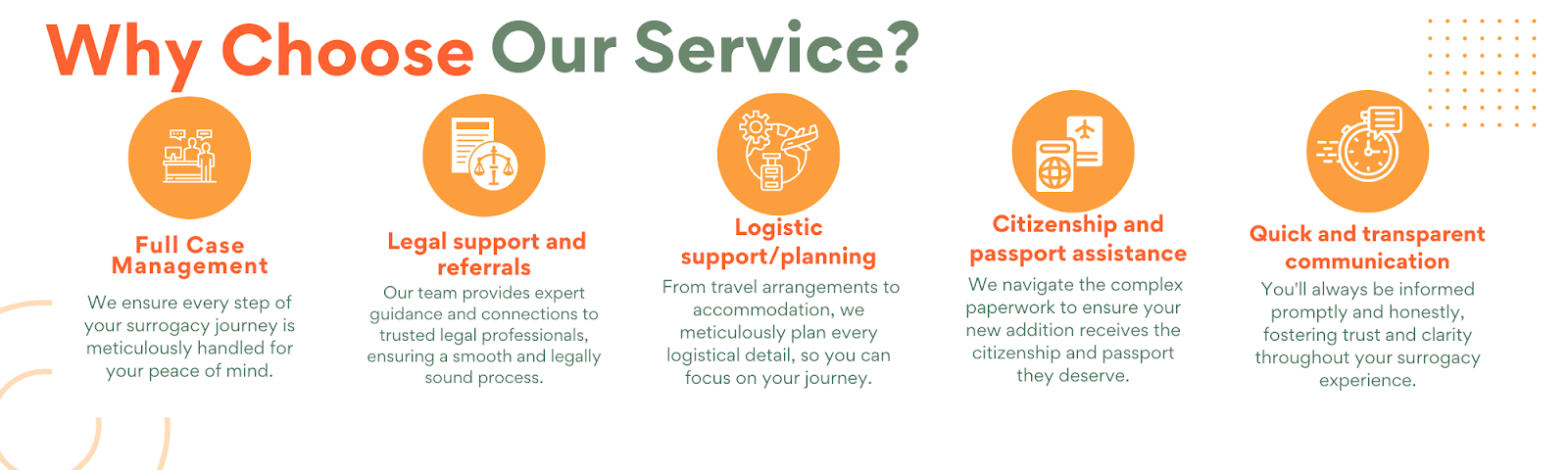
💫 Why Intended Parents Choose Complete Surrogacy for a Safe, Smooth & Successful Surrogacy Journey:
🌍 Access to multiple surrogacy destinations with 15+ years of international experience
🏥 Partnerships with top-tier fertility clinics and agencies, backed by references from past clients
👩🦱 Diverse egg donor options: Asian, Caucasian, African, Oriental, and more
💸 Transparent and affordable pricing—direct payments with no extra agency fees
🔒 No hidden costs—all charges are agreed upon upfront
🤝 Dedicated case manager for personalized support
📲 Fast, honest, and clear communication throughout
📑 Full legal support for visas, documentation, and baby exit processes
🚚 Assistance with frozen sperm/embryo shipment logistics
FAQ: International Surrogacy Laws Explained in Simple Terms
What is gestational versus traditional surrogacy?
Gestational surrogacy means the surrogate carries an embryo created from the intended parents’ egg and/or sperm or from donors; the surrogate has no genetic tie to the child. Traditional surrogacy uses the surrogate’s egg, so she is genetically related. This difference affects legal parentage, medical consent, and the type of contract you’ll need.
How do altruistic and commercial arrangements change legal requirements?
Altruistic arrangements prohibit payment beyond reasonable expenses and often require stricter oversight and court approvals. Commercial arrangements (where compensation is permitted) trigger licensing, regulatory, or immigration rules in some places. Your contractual protections, agency selection, and tax considerations differ accordingly.
How do varying national rules shape the process when parents cross borders?
Rules determine whether you can contract with a surrogate, how parentage is established, and what documents you’ll need at birth. Some countries issue citizenship to the child at birth, others require recognition steps. Differences affect timing, travel, and whether you can use local courts to secure parentage before leaving.
Which countries permit compensated arrangements, and which ban them?
Permission varies widely: some countries allow compensated, regulated programs; others allow only altruistic models; and several ban all forms of paid arrangement. State-level rules in Mexico and provincial rules in Canada create further variation. Always check current statutes and government guidance for specific jurisdictions.
What should U.S. intended parents know about state-by-state variation?
In the U.S., some states have clear, favorable parentage statutes and pre-birth orders; others have restrictions, unclear case law, or outright bans. Your home-state recognition, the state where the child is born, and the state court you use can all affect legal security and timing for travel documents.
How does parentage get established across borders — pre-birth or post-birth?
Some jurisdictions permit pre-birth parentage or parentage orders, which can simplify passport and consular steps. Others require post-birth adoption or a court process to transfer parentage. The route you take depends on local family law and the child’s citizenship rules.
How will a child born abroad obtain U.S. citizenship and travel documents?
If a biological parent meets U.S. transmission requirements (citizenship and physical presence), the child may be eligible for a Consular Report of Birth Abroad (CRBA) and passport. If not, parents may need to pursue a visa or domestic adoption. Embassy guidance and local birth certificates play key roles.
What essential clauses belong in a cross-border parental agreement?
Include clear parties and definitions, medical decision-making authority, compensation and expense coverage, dispute resolution, confidentiality, termination of parental rights where needed, and compliance with local law. An attorney in both countries should review enforceability and required translations.
How do intended parents choose ethical, reliable agencies and clinics?
Look for accredited clinics, transparent pricing, documented consent processes, independent legal counsel for the surrogate, and reviews from other families. Verify accreditation (e.g., ESHRE, ASRM guidelines where relevant), ask for references, and confirm local regulatory compliance.
What protections ensure informed consent and prevent exploitation?
Protections include independent legal advice for the surrogate, documented medical counseling, full translation of documents, fair compensation structures, health insurance for pregnancy, and follow-up care. Ethical programs also include psychosocial screening and ongoing support for surrogates.
How do medical and legal costs typically compare between the U.S. and other countries?
The U.S. tends to be more expensive overall, with higher clinic fees, legal costs, and surrogate compensation. Other countries may offer lower medical fees but add travel, embassy, and legal recognition expenses. Budget for contingencies like repeat IVF, extended stays, and unexpected legal steps.
What travel and timing logistics should parents plan for?
Plan visas, accommodation near the clinic, travel for embryo transfer and birth, and extra weeks for legal steps after delivery. Factor in pediatric care, possible NICU needs, and embassy appointments for CRBA and passports. Contingency plans reduce stress if timelines shift.

Highly esteemed, authoritative, and trusted professional with a 14-year of experience in international surrogacy. Advocate for Secure, Legal, and Affordable International Surrogacy.
Neelam Chhagani, MA (Counselling Psychology) and Holistic Infertility and Third-Party Reproduction Consultant.
Member of European Fertility Society, Best Surrogacy Blogger of 2020, with 300 dedicated blogs, and top contributor on Quora for Surrogacy.
Add Your Comment