

The main difference between surrogacy in Georgia vs surrogacy in Armenia is the legal framework and eligibility criteria. Georgia has a well-established, legally regulated surrogacy program exclusively for married heterosexual couples, offering a secure and streamlined process. Armenia, while emerging as a surrogacy destination, has a newer legal structure that is less defined and currently limits surrogacy primarily to Armenian citizens or residents, making it less accessible for international intended parents.
Overall, Georgia remains the preferred choice for international heterosexual couples seeking a reliable and legally safe surrogacy journey, whereas Armenia is still developing its surrogacy infrastructure and legal clarity. A recent development in Armenia is that surrogacy for single parents is allowed in Armenia now.
Key Takeaways
- Georgia restricts surrogacy to heterosexual couples meeting strict marital or partnership criteria.
- Armenia’s regulations are adapting to support a wider range of intended parents.
- Clinical success rates and specialized care differ between the two countries.
- Cost structures include varying fees for legal, medical, and surrogate support services.
- Birth certificate issuance timelines and requirements are location-dependent.
📞 Get in Touch for a Free Surrogacy Consultation
📱 +91-8800481100 (WhatsApp | LINE | Viber)
📧 neelam@ivfconceptions.com
🌐 www.georgiasurrogacyagency.com
Overview -Surrogacy in Georgia vs. Surrogacy in Armenia
Choosing the right country for your surrogacy journey is critical. Both Georgia and Armenia are gaining attention as surrogacy destinations for international intended parents, but they differ significantly in legal frameworks, eligibility, cost, and process safety.
The main difference between surrogacy in Georgia and Armenia is that Georgia has a long-established, legally secure surrogacy program for married heterosexual couples, while Armenia’s surrogacy laws are newer, more restrictive, and mainly cater to Armenian residents or citizens. This blog post will explore these differences to help intended parents make an informed choice.
Surrogacy Legality and Regulations
| Feature | Georgia | Armenia |
|---|---|---|
| Legal Status | Fully legal and regulated since 1997 | Newer laws, limited regulation |
| Surrogacy Law | National law protects intended parents and surrogate | No comprehensive national law; regulated under civil code with restrictions |
| Surrogate’s parental rights | Surrogate has no parental rights | Surrogate has no parental rights, but process less defined |
| International Intended Parents | Allowed and supported | Mostly restricted to Armenian citizens/residents |
Georgia’s surrogacy laws are clear and protective, making it a safe choice for international couples. Armenia’s legislation is evolving, with restrictions limiting access primarily to locals.
Eligibility Criteria for surrogacy in Georgia vs surrogacy in Armenia
- Georgia: Surrogacy is legally available only to married heterosexual couples with medical infertility. International intended parents are welcome under clear legal guidelines.
- Armenia: Surrogacy is largely restricted to Armenian citizens or permanent residents. International couples face legal hurdles and limited options.
Surrogacy Costs: Surrogacy in Georgia vs Surrogacy in Armenia
| Cost Components | Georgia (USD) | Armenia (USD) |
|---|---|---|
| IVF and Medical Expenses | $20,000 – $30,000 | $15,000 – $25,000 |
| Surrogate Compensation | $15,000 – $20,000 | $10,000 – $15,000 |
| Legal Fees | $3,000 – $5,000 | $2,000 – $4,000 |
| Total Estimated Cost | $50,000 – $75,000 | $35,000 – $70,000 |
Georgia tends to be more expensive but provides greater legal security. Armenia’s costs are lower but come with potential legal and procedural risks.
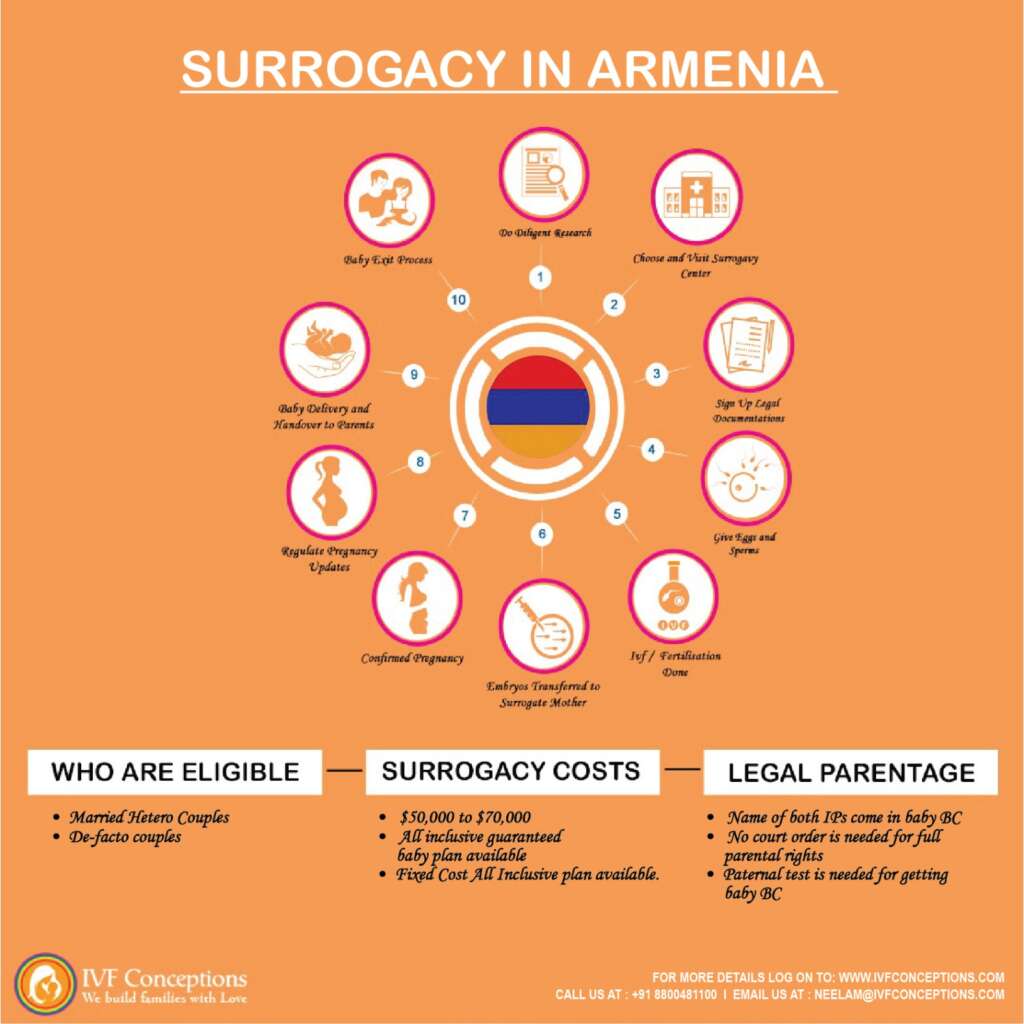
Legal Parentage and Birth Certificates
- In Georgia, intended parents are legally recognized from the moment of conception, and the baby’s birth certificate names them as legal parents immediately after birth.
- In Armenia, legal parentage is more complicated. While the surrogate has no parental rights, international parents may face challenges in obtaining legal recognition and securing a birth certificate that lists them as parents without lengthy procedures.
Process and Timeline for surrogacy in Georgia vs surrogacy in Armenia
| Step | Georgia | Armenia |
|---|---|---|
| Medical Evaluation | 1-2 weeks | 1-2 weeks |
| IVF and Embryo Transfer | 1-2 months | 1-2 months |
| Pregnancy Duration | 9 months | 9 months |
| Legal Documentation | 1-2 months post-birth | 3-6 months post-birth |
| Total Duration | Approximately 12-14 months | Approximately 14-16 months |
Georgia’s process is well established with smooth legal procedures, while Armenia’s timeline may extend due to legal ambiguities.
Travel and Stay Requirements
- Georgia: Usually requires 2-3 short visits (medical appointments, legal formalities). Exit procedures for the baby are efficient.
- Armenia: May require longer stays, especially post-birth, for legal paperwork. Travel logistics may be more demanding.
Pros and Cons Comparison
| Factor | Georgia | Armenia |
|---|---|---|
| Legal Security | Very High | Moderate to Low |
| Eligibility | Married heterosexual couples | Mostly citizens/residents only |
| Cost | Higher | Lower |
| Process Efficiency | Streamlined | Developing |
| Accessibility for Internationals | Easy and supported | Limited |
Prospective parents must weigh critical factors like eligibility rules and legal safeguards when selecting a destination. Both countries offer distinct pathways, but their frameworks prioritize different values—stability in one, adaptability in the other.
Personalized Options for Egg and Sperm Donation
Selecting the right donor is a pivotal step in building your family through surrogacy. Clinics in both regions provide detailed databases with profiles spanning genetic history, health records, and personal interests. This empowers you to make informed choices aligned with your values and medical needs.

Donor Selection Process and Profiles
Partnered agencies curate extensive catalogs of pre-screened donors. Each profile includes:
- Three generations of family medical history
- Genetic screening results for 200+ conditions
- Education level, hobbies, and personality traits
Intended parents can filter candidates by physical characteristics or blood type. “Our goal is to mirror what nature might have provided,” explains a Tbilisi-based coordinator. Embryo transfers are scheduled only after confirming donor-recipient compatibility through advanced testing.
Transparency is non-negotiable. Every donor undergoes:
| Evaluation Stage | Details |
|---|---|
| Medical | Full-body scans, infectious disease panels |
| Psychological | Stability assessments & counseling sessions |
| Genetic | Carrier screening for hereditary conditions |
This rigorous process ensures embryos develop from the healthiest possible genetic material. With 24/7 access to digital profiles, you retain control while specialists handle the science.
Additional Resources to read:
Who Can Be a Surrogate Mother in Georgia?
How to Find a Surrogate Mother in Georgia
Best Surrogacy Centers in Georgia
Is Single Parent Surrogacy Allowed in Armenia?
Single Parents Surrogacy in Armenia
Conclusion
Building a family through surrogacy requires careful navigation of legal, medical, and emotional landscapes. While one country prioritizes traditional family structures, the other embraces evolving inclusivity, each offering distinct advantages based on your needs. Understanding these frameworks empowers you to align expectations with reality.
Final Recommendations
- Choose Georgia if:
- You are a married heterosexual couple from abroad.
- You want legal certainty and a secure process.
- You can accommodate slightly higher costs for peace of mind.
- Choose Armenia if:
- You are an Armenian citizen or resident.
- You prefer lower costs and can navigate evolving legal frameworks.
- You accept potentially longer timelines and more complex legal procedures.
Ready to take the next step? Connect with experienced specialists to design a journey tailored to your family’s vision. Compassionate support awaits those ready to begin.
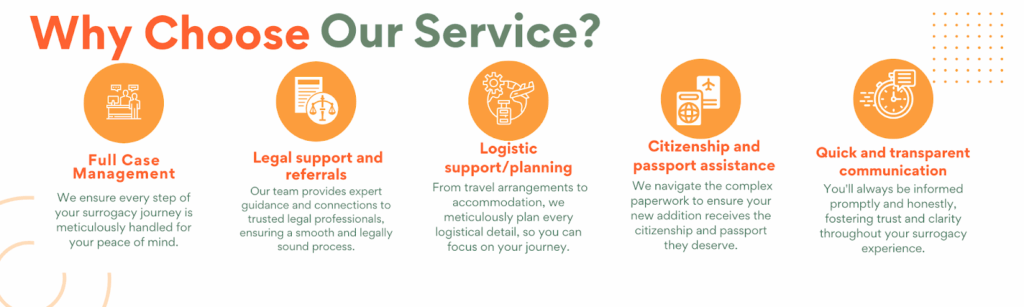
💫 Why Intended Parents Choose Complete Surrogacy for a Safe, Smooth & Successful Surrogacy Journey:
🌍 Access to multiple surrogacy destinations with 15+ years of international experience
🏥 Partnerships with top-tier fertility clinics and agencies, backed by references from past clients
👩🦱 Diverse egg donor options: Asian, Caucasian, African, Oriental, and more
💸 Transparent and affordable pricing—direct payments with no extra agency fees
🔒 No hidden costs—all charges are agreed upon upfront
🤝 Dedicated case manager for personalized support
📲 Fast, honest, and clear communication throughout
📑 Full legal support for visas, documentation, and baby exit processes
🚚 Assistance with frozen sperm/embryo shipment logistics
FAQs for Surrogacy in Georgia vs. Surrogacy in Armenia
Which country offers clearer parental rights recognition after birth?
Georgia provides immediate birth certificate issuance with intended parents’ names, bypassing adoption steps. Armenia requires post-birth court approval for parental rights, adding 4-8 weeks to the process.
Are single parents or LGBTQ+ couples eligible in both countries?
Georgia restricts programs to heterosexual married couples, while Armenia recently banned services for foreign single parents and same-sex couples. Legal consultation is critical for alignment with current regulations.
How do clinic success rates compare between the regions?
Leading Georgian clinics like GGRC Clinic report 68-72% live birth rates per embryo transfer using advanced genetic screening. Armenian programs average 60-65%, with fewer clinics offering PGT-A testing.
What financial protections exist against program disruptions?
Georgian agencies typically include contract clauses covering medical complications or pregnancy loss at no extra cost. Armenian programs often require additional insurance purchases for similar coverage.
Can intended parents choose specific egg donor characteristics?
Georgia’s curated donor databases allow selection by education, physical traits, and medical history. Armenian programs provide limited donor profiles, often requiring compromises on preferred attributes.
How does prenatal care differ between the two countries?
Georgian surrogates receive weekly monitoring through clinics like GGRC using AI-powered ultrasound analysis. Armenian programs typically schedule biweekly checkups without advanced predictive analytics.
What post-birth travel documentation is provided?
Georgian hospitals issue internationally recognized birth certificates, enabling faster passport processing. Armenian-born children require additional notarized translations for immigration purposes.
Are embryo freezing/storage options equally available?
Georgian clinics offer 10-year cryopreservation contracts with embryo viability guarantees. Armenian facilities usually limit storage to 3 years without quality assurances.

Highly esteemed, authoritative, and trusted professional with a 14-year of experience in international surrogacy. Advocate for Secure, Legal, and Affordable International Surrogacy.
Neelam Chhagani, MA (Counselling Psychology) and Holistic Infertility and Third-Party Reproduction Consultant.
Member of European Fertility Society, Best Surrogacy Blogger of 2020, with 300 dedicated blogs, and top contributor on Quora for Surrogacy.
Add Your Comment